
5 Ways to Style a Waistcoat for a Wedding in 2026

Table of Contents
- 1. The Classic Formal Waistcoat Look
- 2. How to Fit a Waistcoat Correctly
- 3. Wedding Waistcoat Colour Combinations That Work
- 4. Styling a Waistcoat for Big and Tall Men
- 5. Layering a Waistcoat for Weddings: Jackets, Shirts and Seasonal Fabrics
- 6. Accessorising Your Wedding Waistcoat
- 7. Daytime vs Evening: Matching Your Waistcoat to the Wedding Dress Code
- Frequently Asked Questions
Last Updated: September 19, 2026
1. The Classic Formal Waistcoat Look
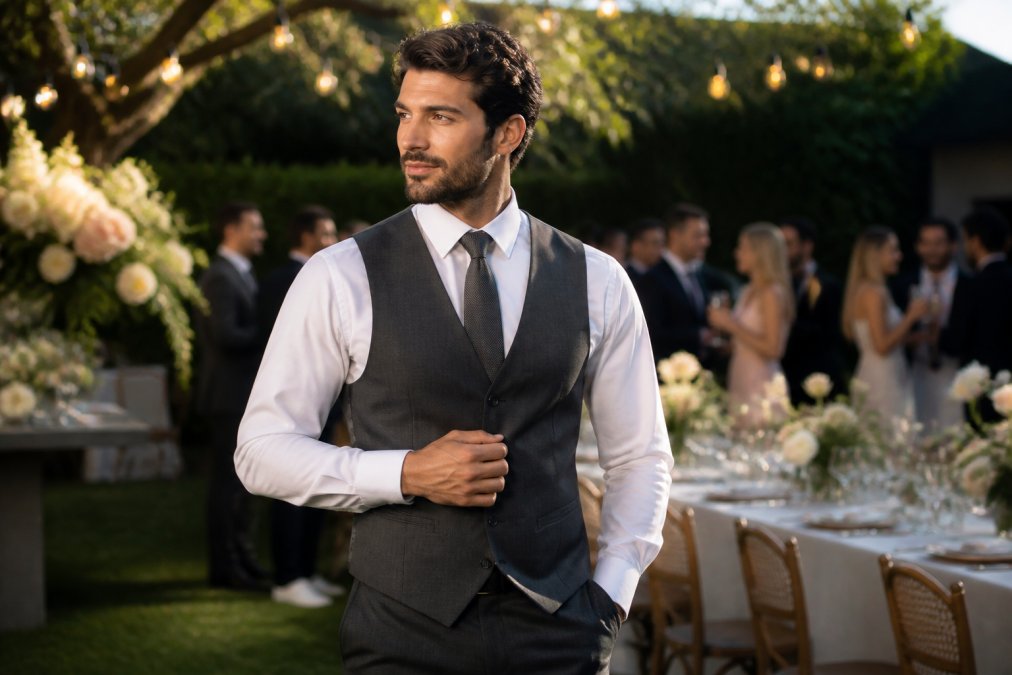
The classic formal waistcoat is the safest, sharpest way to style a waistcoat for a wedding: a tailored waistcoat in a colour that matches or complements your suit, worn over a crisp shirt with a tie. It reads as polished and intentional, and it works for almost every wedding dress code you'll meet.
Here's what makes it work in practice:
- Match the waistcoat to the suit jacket, not the trousers
- Keep the shirt plain white or a very light shade
- Choose a tie in a solid or subtle pattern
- Wear dark leather shoes that match your belt
If you're attending a formal occasion and want one look that never misfires, this is it.
Buttoning Etiquette for Formal Events
Button the top button only. Leave the bottom button undone, always. This isn't a style quirk, it's a long-standing rule of formal wear, and it exists because waistcoats are cut so the bottom button can't close comfortably without pulling the fabric.
For double-breasted waistcoats, button everything. For single-breasted, it's top button only. If your waistcoat has five or six buttons, the same rule applies: all but the bottom one.
2. How to Fit a Waistcoat Correctly
A waistcoat fits correctly when the shoulder seams sit on your natural shoulder line, the front hem covers your trouser waistband, and you can slide a finger under the back strap without strain. Get those three right and the waistcoat will look tailored rather than borrowed.
Most men get the length wrong first. The hem should reach the top of your trousers and no further. Too short and your shirt shows between the waistcoat and belt. Too long and it looks like you're wearing someone else's jacket.
The Hem, Shoulders and Back Strap
Three points decide whether a waistcoat looks made for you or handed down:
- Hem: sits at or just below the waistband, never floating above it
- Shoulders: the seam ends where your shoulder ends, with no overhang
- Back strap: adjustable, and tightened so the waistcoat hugs your back without wrinkling
The back strap is the one adjustment most people ignore. Tighten it until the front sits flat against your torso, then check in a mirror that the fabric isn't bunching at the sides. A well-fitted waistcoat should look like it was cut for you.
If you're buying online, measure your chest at its fullest point and your waist at your natural waistline, then compare both against the size chart. Sizing varies between makers, so check each time rather than assuming your usual size.
3. Wedding Waistcoat Colour Combinations That Work
The colour combinations that work best pair one base colour with one contrasting shade: navy with grey, charcoal with burgundy, black with ivory. Build the outfit around a single base colour, then let the waistcoat or its accessories carry the contrast.
Here's a quick reference for common combinations:
| Base Suit Colour | Waistcoat Option | Tie and Pocket Square | Best For |
|---|---|---|---|
| Navy | Grey or burgundy | Solid or subtle paisley | Daytime and evening |
| Charcoal | Navy or deep green | Ivory or silver | Formal evening |
| Black | Ivory or gold | Black or gold | Black-tie events |
| Light grey | Navy or dusty blue | Burgundy or peach | Daytime weddings |
Base Colours and Shade Contrast
Pick your base colour first, then decide where the contrast lives. A navy suit with a grey waistcoat keeps things understated. Swap in a patterned waistcoat and you shift the whole outfit toward statement dressing.

The rule that saves most people: never let the waistcoat and tie compete at the same intensity. If the waistcoat is patterned, keep the tie plain. If the tie is bold, keep the waistcoat solid.
4. Styling a Waistcoat for Big and Tall Men
Styling a waistcoat for big and tall men comes down to proportion: a slightly longer hem, a wider shoulder line, and a back strap that adjusts far enough to sit flat. The goal is a waistcoat that follows your frame instead of pulling across it.
Purple Paisley Waistcoat and Necktie →
What most guides miss is that the issue usually isn't the chest measurement, it's the length and the back. A waistcoat cut for an average height will sit too high on a taller man, leaving a gap above the trousers that no amount of buttoning fixes.
Look for:
- A hem that reaches the waistband even on a longer torso
- An adjustable back strap with enough range to sit flat
- A classic cut rather than a slim fit, which pulls at the buttons
- Shoulder seams that land on your actual shoulder line
If you're between sizes, size up and use the back strap.
5. Layering a Waistcoat for Weddings: Jackets, Shirts and Seasonal Fabrics
Layering a waistcoat for a wedding means choosing the fabric for the season and the shirt for the layer beneath. Warm-weather weddings suit lighter weaves and a linen or cotton shirt; cooler months suit wool blends and a warmer shirt underneath.
A few practical pairings:
- Summer weddings: lighter fabric waistcoats, cotton or linen shirts, no jacket until evening
- Winter weddings: wool-blend waistcoats, a jacket over the top, warmer shirts
- Indoor formal: silk or jacquard waistcoats work well under a jacket
- Outdoor daytime: matte fabrics photograph better in bright light than high-shine ones
Waistcoat with Skirts and Gender-Neutral Styling
A waistcoat works just as well over a skirt as it does over trousers, and gender-neutral styling is one of the most under-covered angles in wedding attire. Pair a tailored waistcoat with a pleated skirt or a pencil skirt for a look that reads formal without defaulting to a suit.
6. Accessorising Your Wedding Waistcoat
Accessories finish the outfit, and the waistcoat sets the tone: keep them coordinated with the waistcoat's pattern rather than adding a second competing design. A patterned waistcoat needs restrained accessories; a plain one can carry more.
The core pieces:
- Pocket square: match the tie or pick up a colour from the waistcoat pattern
- Cufflinks: simple metal for daytime, more decorative for evening
- Tie: plain if the waistcoat is patterned, patterned if the waistcoat is plain
- Watch: slim and understated, especially with a fitted waistcoat
7. Daytime vs Evening: Matching Your Waistcoat to the Wedding Dress Code
Daytime weddings call for lighter colours and matte fabrics; evening weddings call for deeper tones and richer textures. Matching your waistcoat to the dress code is really about reading the invitation and the time of day before you choose the colour.

A simple way to decide:
- Daytime, garden or beach: light grey, navy, peach or dusty blue waistcoats
- Daytime, formal: navy or charcoal with a subtle pattern
- Evening, formal: black, charcoal, burgundy or gold
- Black-tie: ivory or black waistcoat, often with a bow tie
Frequently Asked Questions
Should the bottom button of a waistcoat always be left undone?
Yes. Leaving the bottom button undone is standard buttoning etiquette and lets the waistcoat sit properly over your trousers without pulling. It also gives you room to move and sit comfortably through a long wedding day. Fasten every other button, and if your waistcoat has five or more buttons, you can leave the bottom one open without it looking untidy. This small detail makes a real difference to how well your waistcoat fits.
Can you wear a waistcoat without a jacket to a wedding?
You can, and it works well for smart casual and daytime weddings. A waistcoat worn without a jacket reads as relaxed but still polished, especially in lighter fabrics and brighter colours. For formal or black-tie weddings, keep the jacket on for the ceremony and remove it later at the reception. Pairing a waistcoat with an oxford shirt, tailored trousers and a pocket square gives you a complete look without the extra layer.
How should a waistcoat fit for a formal wedding?
A wedding waistcoat should sit close to the body without pulling across the chest, with the hem covering your waistband so no shirt shows between the waistcoat and trousers. Shoulders should line up with your natural shoulder line, and the armholes should not dig in. Use the adjustable back strap to fine-tune the fit. If you are between sizes, size up and have the back strap taken in rather than wearing something too tight.
What accessories pair best with a wedding waistcoat?
A matching necktie, pocket square and cufflinks create a coordinated finish. A flat link bracelet or classic hoops work as subtle jewellery, and a satchel bag keeps your essentials tidy without ruining the line of your outfit. For colour, match your pocket square to your waistcoat pattern and keep the tie slightly different in shade. Sets that include all four pieces make this easy, and you can mix them with shirts and trousers you already own.
How do I choose the right waistcoat fabric for a summer wedding?
Lighter fabrics breathe better in warm weather. Silk and jacquard weaves drape well and feel smooth against the skin, which suits daytime ceremonies and outdoor venues. For cooler months or evening events, a heavier jacquard or brocade holds its shape and adds texture under jacket lighting. If the wedding runs from afternoon into evening, a silk waistcoat in a mid-weight weave handles both without you needing to change.