
Are Expensive Dress Shirts Worth It?

Table of Contents
- What Makes a High-Quality Dress Shirt
- Cheap vs Expensive Dress Shirts: Key Differences
- What's a Good Price to Pay for a Dress Shirt
- Are Bespoke Shirts Worth It
- When Expensive Dress Shirts Make Sense
- When Affordable Dress Shirts Are the Right Choice
- Conclusion
- Frequently Asked Questions
Last Updated: October 18, 2026
What Makes a High-Quality Dress Shirt
The difference between a dress shirt that lasts two seasons and one that lasts a decade comes down to three things: fabric, construction, and fit. Most people focus on price alone and miss the real quality indicators.

A high-quality dress shirt combines premium fabric, meticulous stitching, and a flattering cut. Examining these elements together shows why expensive dress shirts command higher prices, and when that premium justifies itself.
Fabric Quality and Fibre Choice
Cotton is the standard for dress shirts, but not all cotton is equal. Long-staple varieties like Egyptian, Pima, and Supima produce softer, more durable fibres that resist pilling and fading after repeated washes.
Thread count is misunderstood: 80-120 is ideal for dress shirts, and anything significantly higher often means thinner threads twisted together, which weakens the fabric. The real quality signal is fibre length and weave consistency.
Fabric weight affects performance. Light fabrics (under 140 gsm) suit warm weather but wrinkle easily; medium-weight (140-170 gsm) balances breathability and wrinkle resistance; heavier fabrics (170+ gsm) hold their shape but feel less comfortable in summer.
Silk blends and pure silk shirts, like the SIMON VON PINK SOLID SILK MEN'S SHIRT at NZD $97.75, offer exceptional breathability and a luxurious drape.

Construction and Stitching
Construction separates affordable shirts from expensive ones, and stitching shows the difference most clearly.
Single-needle stitching creates a more flexible, durable seam than double-needle. Expensive dress shirts use single-needle construction; budget shirts use double-needle to speed up production.
Quality dress shirts have 16-20 stitches per inch; cheaper shirts often have 10-14. More stitches mean stronger seams that won't unravel after a few washes.
The collar and cuffs reveal construction quality immediately. Expensive shirts use multiple interfacing layers and a second row of stitching on the collar underside; budget shirts skip this.
Quality dress shirts use reinforced button holes and a thread shank, a small gap between button and fabric that prevents stress on the threads. Cheap shirts sew buttons flat, so they pop off more easily.
Fit and Tailoring
An expensive dress shirt tailored to your body will always outperform a cheaper shirt that fits poorly off the rack. However, fit quality varies significantly between brands and price points.
The shoulder seam should sit at the edge of your shoulder bone, the sleeve should end at your wrist bone with arms hanging naturally, and the body should taper slightly at the waist without pulling across the chest.
Many expensive dress shirts offer better proportions because they're cut with more precision, accounting for natural body-shape variation rather than using a single template. This matters most if you're between sizes or have a non-standard build.
Tailoring fixes fit issues but adds cost. Bespoke shirts build fit in from the start, while ready-to-wear expensive dress shirts often need little or no tailoring, saving money long-term.
Cheap vs Expensive Dress Shirts: Key Differences
The gap between inexpensive and expensive dress shirts is measurable. Here's where that money actually goes.

Inexpensive dress shirts use lower-grade cotton, simpler construction, and minimal finishing: single-layer fused collars, buttons sewn directly to fabric, and double-needle seams with fewer stitches per inch. These shortcuts cut manufacturing time and cost but compromise durability.
Expensive dress shirts invest in premium materials and fine finishing: multi-layer collars finished on both sides, buttons reinforced with a thread shank, and single-needle seams with 18-20 stitches per inch. These details take longer but resist wear.
The most telling difference emerges after 20-30 washes. Inexpensive shirts lose shape, develop stubborn wrinkles, and wear at stress points like collar edges and cuffs. Expensive dress shirts maintain structure and appearance because materials and construction are engineered for repeated washing.
| Feature | Inexpensive Shirt | Expensive Shirt |
|---|---|---|
| Cotton grade | Short-staple, mixed quality | Long-staple (Egyptian, Pima) |
| Stitches per inch | 10-14 | 16-20 |
| Collar construction | Single-layer fused interfacing | Multi-layer with underside finishing |
| Seam type | Double-needle | Single-needle |
| Button attachment | Sewn flat to fabric | Reinforced with thread shank |
| Expected lifespan | 2-3 years | 5-10 years |
| Wrinkle resistance | Moderate; requires frequent pressing | Better; holds shape longer |
How to Inspect Shirt Quality
You can assess shirt quality without wearing it. Look for these markers when examining a dress shirt in person or online.
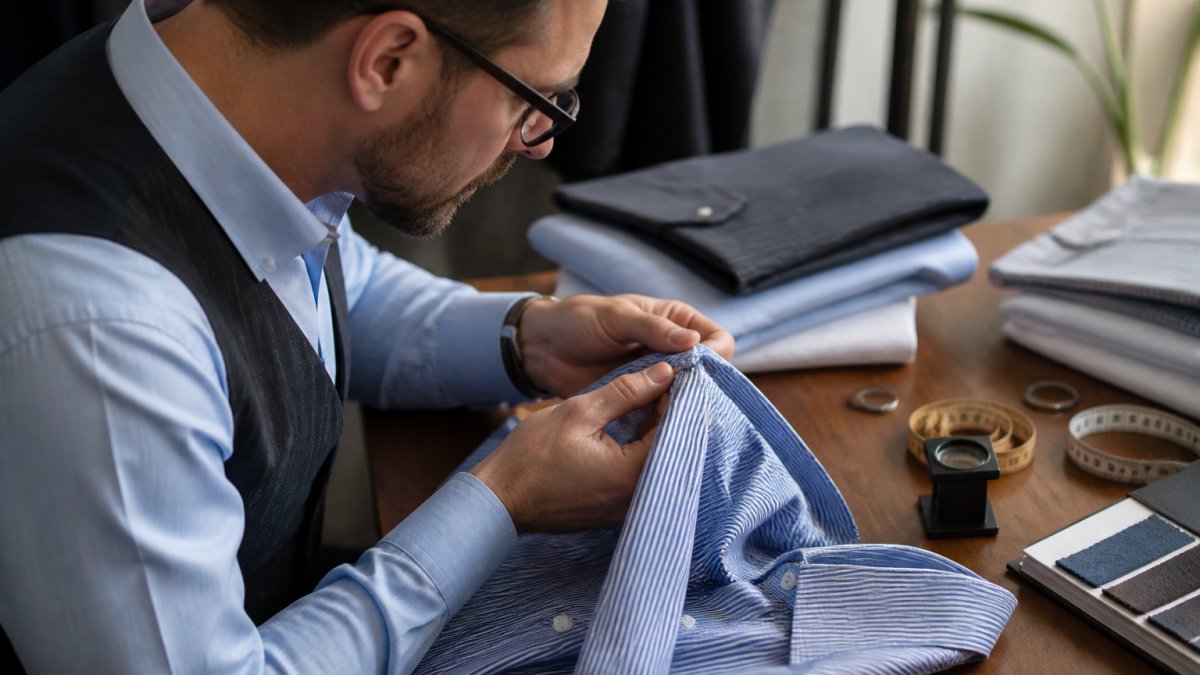
Examine the seams. Turn the shirt inside-out and run your finger along the seams. Quality seams are straight, consistent, and free of loose threads.
Check the collar. Flip it and look at the underside.
Feel the fabric. Quality cotton feels smooth with a slight sheen; lower-grade cotton feels stiff or fuzzy.
Inspect the buttons. Quality dress shirts leave a small gap between button and fabric (the thread shank); cheap shirts sew buttons flat.
Look at the cuffs. They should be finished neatly with no raw edges, and single-needle stitching on the cuff edge signals quality.
Durability and Expected Lifespan
Lifespan depends on fabric quality, construction, care, and wear frequency.
An inexpensive dress shirt typically lasts 2-3 years with regular wear and proper care. The collar frays, cuffs lose shape, and fabric may pill or fade until the shirt no longer looks polished enough for professional settings.
An expensive dress shirt lasts 5-10 years or longer. Premium cotton resists pilling and fading, reinforced collars and cuffs hold their shape, and seams stay intact after dozens of washes. Some men wear the same shirt for a decade, refreshing it with tailoring as needed.
Cost per wear clarifies the difference.
Care matters: cold washing, air-drying, and proper ironing extend any shirt's lifespan. But quality fabrics and construction handle frequent washing better, so an expensive dress shirt still looks polished after 100 washes while an inexpensive one may not.
What's a Good Price to Pay for a Dress Shirt
The right price depends on your use case, budget, and durability expectations.
SIMON VON PINK SOLID SILK MEN'S SHIRT-CY2013 →
For occasional wear, a few times per year, an affordable shirt in the NZD $50-100 range makes sense: decent fabric and acceptable construction without paying for longevity you won't need. SimonVon Shop's silk dress shirts at NZD $97.75 offer premium fabric at a reasonable price for casual formal occasions.
Match price to frequency of use. Buying five expensive dress shirts for occasional wear is wasteful; buying five inexpensive shirts for daily professional wear is equally wasteful because they deteriorate quickly.
Cost Per Wear and Long-Term Value
Cost per wear is the most honest way to evaluate whether expensive dress shirts are worth it.
Divide the shirt's price by the number of times you'll wear it before it stops looking professional.
The expensive shirt is comparable or cheaper per wear, but only if you actually wear it 700 times. Buy one and wear it 150 times before moving on, and you've overpaid significantly.
For men who wear dress shirts daily or several times per week, expensive dress shirts almost always win on cost per wear; durability and appearance retention justify the higher upfront price. For occasional wearers, affordable options make more financial sense.
Replacement frequency matters too. Buying one expensive dress shirt every five years is less disruptive than replacing inexpensive shirts every two years, and you avoid mixing older and newer shirts in your wardrobe.
Are Bespoke Shirts Worth It
Bespoke dress shirts are custom-made to your exact measurements and preferences and require multiple fittings.
A bespoke shirt is worth it if you have a non-standard body shape, significant size variation between brands, or specific preferences for collar style, cuff type, and fabric. The fit is perfect because it's built for you, not a generic size.
Bespoke isn't necessary for most men. A quality ready-to-wear expensive dress shirt, possibly tailored at the shoulders and sleeves, delivers 90% of the benefit at half the cost;
Bespoke makes sense if you wear dress shirts daily, have tried multiple brands without a good fit, or want specific aesthetic details (collar roll, button placement, pocket style) that ready-to-wear doesn't offer. For occasional wearers or men who fit standard sizes comfortably, the investment isn't justified.
When Expensive Dress Shirts Make Sense
Expensive dress shirts are the right choice in specific situations.
Daily professional wear. Wearing a dress shirt four or more days per week, the durability and appearance consistency of expensive shirts pay for themselves. You'll own fewer shirts, replace them less often, and stay more polished.
Client-facing roles. In law, finance, consulting, and sales, where appearance influences client perception, expensive dress shirts signal competence and attention to detail.
Long-term wardrobe building. If you're investing in a professional wardrobe for years, expensive dress shirts are foundational pieces that outlast cheaper alternatives and maintain their appearance.
Specific fabric preferences. If you prefer silk, premium cotton blends, or specific weaves, the expensive range offers better options; affordable shirts rarely use these materials.
When Affordable Dress Shirts Are the Right Choice
Affordable dress shirts make sense in other contexts.
Occasional formal wear. If you wear a dress shirt fewer than 10 times per year, an affordable option covers your needs and looks fine for the events you attend.
Experimenting with style. Trying different collar styles, colours, or fits is cheaper with affordable shirts. Once you know what works, invest in expensive versions.
High-risk environments. In trades, hospitality, or active work where shirts get stained, torn, or damaged, expensive dress shirts aren't warranted. Buy affordable options you can replace easily.
Budget constraints. If formal wear is necessary but your budget is limited, affordable dress shirts build a basic wardrobe. Prioritise fit and fabric quality within your budget, then upgrade as funds allow.
Casual formal occasions. Beach weddings, garden parties, and relaxed formal events don't require expensive dress shirts. An affordable option works perfectly well.
Conclusion
Expensive dress shirts are worth it if you wear them regularly and need them to maintain their appearance for years. Premium fabrics, meticulous construction, and superior fit justify the higher price when you calculate cost per wear over the shirt's actual lifespan.
But expensive dress shirts aren't necessary for everyone. If you wear dress shirts occasionally or are still building your formal wardrobe, affordable options deliver excellent value. Match the shirt's quality level to how often you'll actually wear it.
At SimonVon Shop, we offer premium silk dress shirts like the White Solid Satin Men's Long Sleeve Dress Shirt at NZD $97.75, a price point that bridges affordability and quality. Whether you need occasional formal wear or are building a professional wardrobe, we have options designed to deliver value and confidence. Shop Now and discover how quality dress shirts can elevate your formal style.
The choice between expensive and affordable dress shirts depends on your professional needs, frequency of use, and long-term wardrobe strategy. If you wear dress shirts multiple times per week, expensive options pay for themselves through durability and consistent appearance; if you wear them occasionally, affordable dress shirts serve you well.
Frequently Asked Questions
What's a good price to pay for a dress shirt?
A good price depends on your use case and frequency. For occasional wear, affordable options offer solid value. For professional environments where you wear dress shirts regularly, investing in better fabric, construction, and durability is justified. Premium bespoke shirts suit those who wear them frequently and prioritise perfect fit. Calculate cost per wear to understand long-term value.
What makes a high-quality dress shirt?
High-quality dress shirts combine three elements. First, fabric: long-staple cotton (Egyptian, Pima) or silk blends feel smoother and last longer than short-staple cotton. Second, construction: single-needle stitching (visible on seams), reinforced collar stays, and finished hems indicate craftsmanship. Third, fit: quality shirts have proportional collar, sleeve, and body dimensions that work well without major tailoring. Inspect inside seams for neat stitching and check for loose threads or uneven hems.
Do expensive dress shirts last longer?
Expensive shirts typically last longer when made from quality fabric and construction. A premium shirt with reinforced seams and long-staple cotton can withstand 50-100 washes before visible wear. Budget shirts may show fraying, shrinkage, or collar damage after 20-30 washes. However, durability depends on care: washing in cold water, air-drying, and proper storage extend any shirt's life. An affordable silk blend shirt cared for meticulously may outlast an expensive cotton shirt that's machine-dried frequently.
Are bespoke shirts worth it?
Bespoke shirts are worth it if you wear dress shirts regularly, have a difficult fit, or need specific design details. Custom tailoring eliminates fit issues that off-the-rack shirts often have, and you choose exact fabric weight, collar style, and cuff type. For occasional wear or standard sizes, ready-to-wear options like SimonVon's silk dress shirts at $97.75 NZD offer better value. Bespoke makes sense for corporate professionals or formal-event attendees who wear them weekly.