
Benefits of Buying Made to Measure Suits Online

Quick Summary
Made to measure suits are cut from a pattern drafted around your own body rather than a standard size block, so the shoulders, sleeves and trouser length fit you specifically. This usually means fewer alterations and a more accurate fit than off-the-rack suits, though they cost more and take longer to arrive.
- A tailor drafts the pattern from measurements of your shoulders, chest, waist, seat, arm length, inside leg and posture.
- Off-the-rack suits are graded from a handful of body templates, so shoulder, sleeve and trouser length are often compromised.
- Alterations can fix length and waist but cannot change the underlying cut of a ready to wear suit.
- Check whether a half-canvas jacket is used, since it lets the front mould to your body better than a fused jacket.
- Measure over the shirt and trousers you will wear with the suit, standing naturally rather than holding your breath.
Table of Contents
- Why Made to Measure Suits Fit Better Than Off-the-Rack
- Made to Measure vs Ready to Wear: What Actually Changes
- How to Identify High Quality Suit Construction
- What Fabric, Lining and Finishing Mean for Longevity
- Average Cost of Custom Suits in NZD and Where the Value Sits
- Ordering Online: Sizing, Measurements and Timelines
- Choosing Your Made to Measure Suit for Your Next Occasion
- Frequently Asked Questions
Why Made to Measure Suits Fit Better Than Off-the-Rack
A suit that looks fine on the hanger can still pull across the back, bunch at the sleeve, or sit too long in the trouser leg. Made to measure suits solve this by being cut around your actual body rather than a standard block.
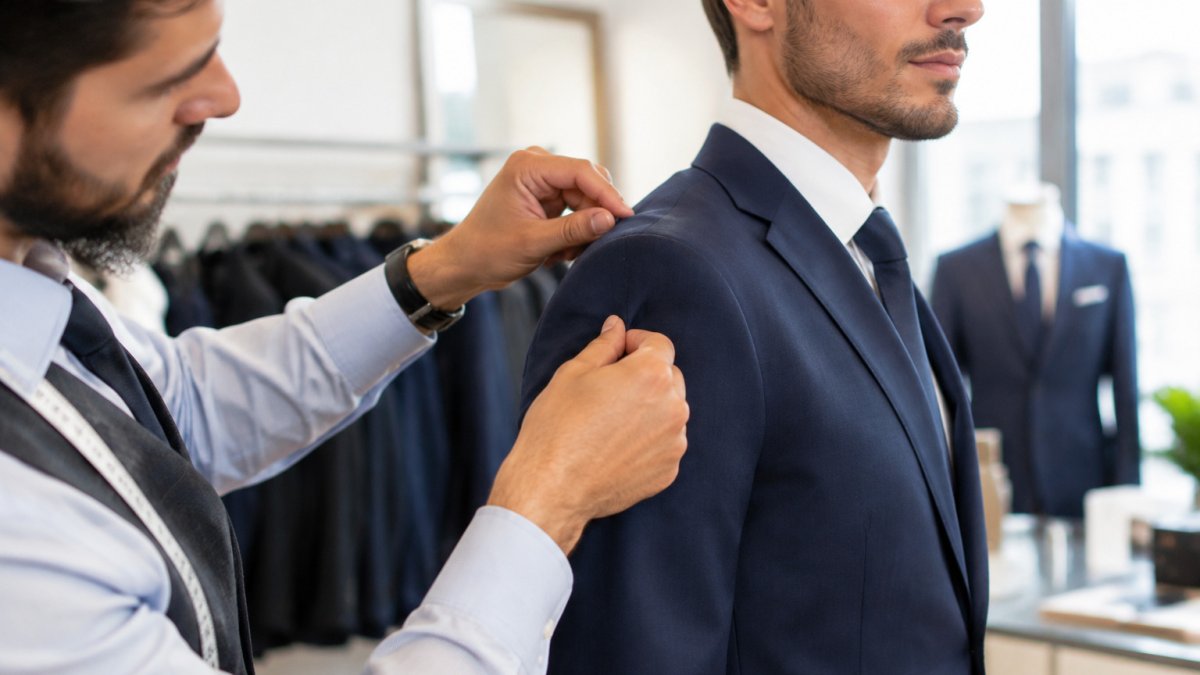
A tailor typically takes measurements across the shoulders, chest, waist, seat, arm length, inside leg and posture, then drafts a pattern for you alone. Off-the-rack suits are generally graded from a handful of body templates, so fit across the shoulder, sleeve and trouser length is often a compromise.
Made to measure can be a more forgiving option for taller or broader men, and for groomsmen in a wedding party who range widely in size.
Image: A tailor's hands adjusting the shoulder seam of a navy suit jacket on a man standing in a bright fitting room.
Made to Measure vs Ready to Wear: What Actually Changes
Made to measure is a suit cut from your own pattern and adjusted to your measurements. Ready to wear is manufactured in set sizes and then altered where needed. The gap between them is mostly about how much of the fit is decided before the garment is made.
With made to measure, the key decisions (shoulder slope, jacket length, waist suppression, trouser rise and break) are set in the pattern. With ready to wear, those decisions are made by the manufacturer, and any changes happen afterwards through alterations. Alterations can correct length and waist, but they cannot change the underlying cut.
For most buyers, the practical difference is accuracy. A made to measure suit generally costs more and takes longer, but it can reduce the need for repeated tailoring visits.
How to Identify High Quality Suit Construction
Construction is what separates a suit that keeps its shape from one that loses it after a season. You can check a lot of it from photos and product details before you buy.
- Canvas: A half-canvas jacket has a horsehair or wool canvas in the chest and lapels, which lets the front mould to your body. A fused jacket is glued and tends to bubble over time.
- Shoulder: Look for a natural shoulder line with a light structure. Heavy padding usually signals a cheaper cut.
- Stitching: Hand-stitched lapels and buttonholes are a mark of quality, though well-executed machine stitching is also acceptable.
- Lining: A breathable, well-finished lining makes the jacket easier to slip on and off.
Check the fabric composition and construction details in the product listing before ordering.
What Fabric, Lining and Finishing Mean for Longevity
Fabric drives how a suit looks, feels and wears. Natural fibres such as wool breathe well and recover their shape, while polyester blends resist creasing and are often easier to care for.
Lining and finishing matter as much as the outer cloth. A quality lining can reduce friction and wear at the armholes, and neat seam finishing helps prevent fraying.
A well-made suit can last for years with regular brushing, airing between wears and dry cleaning only when needed.
Average Cost of Custom Suits in NZD and Where the Value Sits
Price in made to measure is driven by three things: the cloth, the construction and the amount of individual work in the pattern. Our current SimonVon Shop suit sets are priced at $230.00 NZD, which includes a jacket, vest and trousers for formal wear.
The value case is easier to see when you compare total cost rather than sticker price. A ready-to-wear suit that does not fit well usually needs alterations, taking in the waist, shortening sleeves, adjusting the trouser break, and each visit adds cost and time. If the shoulders or the jacket length are wrong, alterations often cannot fix them. A made-to-measure suit can reduce that follow-up spend because the fit decisions are made in the pattern.
Cost per wear is the clearer measure. A suit worn weekly for work across a couple of years is worn roughly a hundred times, which works out to a little over $2 per wear at $230.00 NZD before any alterations. The figure falls the longer the suit stays in rotation.
Men's 3-Piece Suit Set -Slim Fit with Lapel Collar, Stretch Fabric, Solid →
Check what a headline price includes, such as cloth range and any alteration allowance, before comparing quotes.
Image: A close-up of a suit jacket's interior showing the canvas layer and lining stitching.
Ordering Online: Sizing, Measurements and Timelines
Buying made to measure online works when you treat the measurement session as the most important part of the purchase. A suit is only as good as the numbers it was drafted from, so it is worth setting aside time and a second pair of hands rather than rushing through a size guide.
The core measurements a made-to-measure pattern is drafted from are: neck, chest, waist, seat, shoulder width, sleeve length, jacket length, trouser waist, trouser rise, inside leg and outseam. Posture matters as much as circumference, a forward shoulder or a pronounced seat changes how the jacket hangs, and a good measurement form will ask about it. Measure over a shirt and trousers you would wear with the suit, keep the tape snug but not tight, and stand naturally rather than holding your breath.
Body type changes which numbers matter most. If you are athletic with broad shoulders and a narrow waist, the chest-to-waist drop and the shoulder measurement drive the fit, and you should expect the tailor to ask about sleeve pitch so the arms hang cleanly. If you are slim, the risk is a jacket that looks borrowed from a larger frame, so jacket length and waist suppression need close attention. If you carry weight through the middle, the trouser rise and the jacket's front balance matter more than the chest measurement, because a low rise will pull and a short jacket will ride up. First-time buyers sometimes focus on chest and waist and overlook rise, sleeve pitch and posture, which can make a remake necessary.
Timelines depend on production and delivery, and made to measure generally takes longer than ready to wear. Plan backwards from your event: allow time for the order to be produced, shipped and, if needed, altered locally. For a school ball or wedding, order early enough that a local alteration is still possible if something needs adjusting. For group orders, collect every person's measurements in one session, have each person confirm their own numbers, and keep a record so reorders are consistent.
Check whether a product page states the full measurement set it drafts from before you order.
Image: A tailor's measuring tape around a man's chest while a second person records numbers on a measurement form.
Choosing Your Made to Measure Suit for Your Next Occasion
Start with the occasion. A black tie gala calls for a different look from a corporate meeting or a wedding party. Choose the colour, fabric and accessories to suit the event rather than buying the first suit you see.
Our Men's 3-Piece Suit Set in slim fit, burgundy with a lapel collar, is one option for a formal event where you want a coordinated look with a vest included. It is made from a polyester and viscose blend with a slight stretch, and its listed care instruction is dry clean. If you prefer a classic colour, the navy and black 3-piece suits in the same range are also worth a look.
Browse the full collection to find the right combination of suit, vest and accessories for your next occasion.
Frequently Asked Questions
What is the difference between bespoke and made to measure suits?
Bespoke suits are cut from a pattern drafted from scratch for one client, usually across several fittings. Made to measure suits start from an existing block pattern and are adjusted to your measurements, so they take less time and cost less. Made to measure starts from an existing block pattern and is adjusted to your measurements. Bespoke suits suit clients who want full control over every detail of the cut and construction.
Is a made to measure suit worth the extra cost?
A suit that fits well can look more polished and wear more comfortably. Check SimonVon Shop's current range, including the Navy Blue Men's Elegant 3pcs Suit at $230.00, to compare options.
How do I know if a suit is well constructed?
Look at the jacket lining, the stitching at the lapels and the way the fabric drapes. When judging construction, look at the lining, the stitching and how the fabric drapes. Fabric composition matters too: a polyester and viscose blend, as used in the Men's 3-Piece Suit Set at $230.00, offers a light stretch and easy care.
Can I alter a made to measure suit later?
Alteration options depend on the garment, so check with the seller before ordering. Keep the garment's care label in mind, as the Men's Elegant Black 3pcs Suit recommends hand wash or professional dry clean. Taking the suit to a tailor after a few months of wear is a good way to refine the fit.
