
Choosing Dress Shirts for Weddings: A 2026 Guide

Table of Contents
- Wedding Dress Codes for Men: Decoding the Invitation
- Dress Shirt Collar Types Explained: From Spread to Wingtip
- Choosing the Right Fabric: Twill, Poplin, and Herringbone
- How to Match Ties with Dress Shirts for a Cohesive Look
- Fit and Tailoring: Finding Your Perfect Silhouette
- The Groom vs. Guest Distinction in Choosing Dress Shirts for Weddings
- Caring for Your Dress Shirt: Keeping It Crisp for the Big Day
- Frequently Asked Questions
Last Updated: September 9, 2026
Wedding Dress Codes for Men: Decoding the Invitation
The first step in choosing dress shirts for weddings is understanding what the invitation actually requires. Dress codes for weddings range from black tie, which demands a tuxedo and formal shirt, to semi-formal and cocktail attire, where a tailored suit with a crisp dress shirt is the standard. A wedding dress code for men is essentially a style contract: it tells you the level of formality, which dictates your fabric, collar, and cuff choices. The most common mistake is overdressing for a garden ceremony or underdressing for an evening gala.

Getting this wrong can leave you visibly out of place in photos that last a lifetime. Before you buy anything, check the invitation for terms like "black tie," "formal," or "semi-formal," and when in doubt, ask the couple directly. This guide covers the complete process of choosing dress shirts for weddings, from collars and fabrics to fit and care, so you arrive looking intentional rather than improvised.
Dress Shirt Collar Types Explained: From Spread to Wingtip
The collar frames your face and sets the tone for your entire outfit. A spread collar is the most versatile option for weddings, as its wider angle accommodates both standard tie knots and the bulkier Windsor knot, making it a safe choice for most groomsmen. For black-tie events, the wingtip collar is the only correct choice, designed specifically to sit beneath a bow tie, while the button-down collar reads as too casual for most wedding settings and is best reserved for smart-casual occasions.
Your face shape and neck length should guide your decision. Men with longer necks suit taller collars, while those with shorter necks should choose a lower band to avoid looking cramped. A common mistake is selecting a collar that is too tight; you should be able to slide two fingers comfortably between the collar and your neck. When you are choosing dress shirts for weddings, remember that the collar style also dictates your tie choice, which we will address shortly.
Choosing the Right Fabric: Twill, Poplin, and Herringbone
Fabric choice determines both how you look and how comfortable you remain through a long ceremony and reception. But beyond the weave pattern, the true performance of a shirt lies in the quality of its yarn and the density of its weave. Two shirts can both be 'poplin', yet feel and behave entirely differently based on these factors.
Poplin is a plain-weave cotton with a tight, smooth, and crisp hand-feel. Its lightweight nature makes it the best option for summer weddings and warmer venues, as the tight weave allows for excellent airflow. However, this same structure offers little in the way of wrinkle resistance; a poplin shirt will crease readily if you are sitting for long periods. For a beach or garden ceremony in January, a high-quality poplin with a thread count of 80s or higher is your best bet for staying cool.

Twill is characterised by its diagonal weave, which you can see and feel. This structure makes the fabric more durable and naturally wrinkle-resistant than poplin, as the diagonal ribs hide creases. Twill also drapes better, making it ideal for all-day wear and travel to a destination wedding. The trade-off is that it is a heavier fabric, which can feel warm in direct summer heat. A two-ply twill, where two yarns are twisted together before weaving, offers superior strength and a smoother feel, justifying its higher price point for a groom's shirt.
Herringbone, a variation of twill with a distinctive V-shaped pattern, adds textural contrast and visual interest without being loud. The broken zig-zag pattern catches light differently, adding depth to photographs. This is a perfect choice for the groom who wants to stand out subtly from his groomsmen in a solid twill or poplin.
When comparing fabrics, consider the season and the weight of the shirt. A breathable fabric like poplin suits a daytime garden ceremony, while a heavier twill provides structure for an evening event. Many grooms overlook fabric weight, but it directly affects how the shirt drapes under a jacket and how much you sweat during the first dance. A common mechanism to look for is 'mercerised cotton', a treatment that increases the fabric's lustre, strength, and ability to take dye, resulting in a more vibrant white that photographs crisply.
| Fabric | Weave | Best For | Key Benefit | Key Trade-off |
|---|---|---|---|---|
| Poplin | Plain, smooth | Summer, day weddings | Lightweight and breathable | Creases easily |
| Twill | Diagonal, textured | All-day wear, travel | Durable and wrinkle-resistant | Heavier, can be warm |
| Herringbone | V-shaped diagonal | Groom statement looks | Adds textural contrast | Can be busy for some |
How to Match Ties with Dress Shirts for a Cohesive Look
Matching ties with dress shirts is where many outfits fall apart, usually because the tie and shirt compete for attention instead of working together. The rule of thumb is contrast: a solid shirt pairs well with a patterned tie, while a patterned shirt calls for a solid or subtly textured tie. For a white dress shirt, the most versatile base, nearly any tie colour works, which is why it remains the safest choice for groomsmen who need to coordinate as a group.

For off-white and ivory shirts, which photograph warmer, choose ties in deeper tones like burgundy, navy, or forest green to maintain contrast. When wearing a patterned shirt, such as a subtle stripe or check, the tie pattern should be larger or smaller in scale than the shirt pattern to avoid clashing. A common mistake is matching the tie exactly to the shirt colour, which creates a flat, lifeless look. Instead, aim for tonal coordination, where the tie complements the shirt and the suit. We recommend selecting your tie and pocket square together so they coordinate without matching precisely, a distinction that separates polished from rehearsed.
Fit and Tailoring: Finding Your Perfect Silhouette
A tailored fit is the single biggest factor separating a sharp wedding outfit from a sloppy one. The dress shirt should follow your body's natural lines without pulling across the chest or billowing at the waist, with shoulder seams sitting exactly at the edge of your shoulders. Sleeve length matters too: with your arms relaxed at your sides, the cuff should sit at the base of your thumb, allowing about 1.5 centimetres of shirt cuff to show beyond your jacket sleeve.
Slim fit shirts suit leaner builds, while regular or classic fits provide more room through the chest and waist. If you fall between sizes, always size up and have the shirt taken in at the waist rather than squeezing into a smaller size. For grooms, a bespoke or made-to-measure shirt is worth the investment, as it guarantees a flawless fit for photographs. The same principles apply when considering styling tips for big and tall formal wear, where proper proportions become even more critical.
Styling Tips for Big and Tall Formal Wear
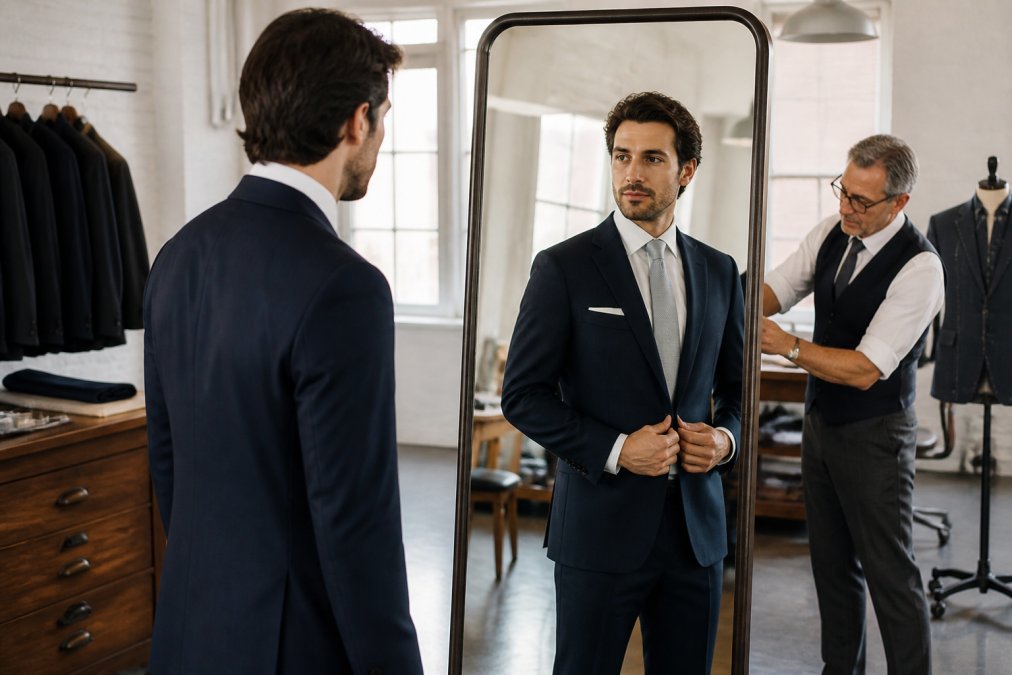
Styling tips for big and tall formal wear start with proportion rather than size. Taller men should look for shirts with longer tail lengths to prevent the shirt from coming untucked, while bigger men benefit from a spread collar that balances a broader face and neck. Avoid slim-fit cuts that pull across the chest; instead, seek a "tailored" or "athletic" fit that provides room through the shoulders while tapering at the waist.
The most common frustration for bigger blokes is finding a shirt where the neck fits without the body being oversized. Look for shirts with adjustable cuff plackets and ensure the armholes are cut high enough to allow movement without excess fabric bunching. Darker shirt colours and vertical stripes create a lengthening effect, while high-contrast patterns draw attention to areas you may prefer to minimise. When choosing dress shirts for weddings, prioritise comfort in the shoulders and chest, as a shirt that is tight anywhere will show in every photograph.
The Groom vs. Guest Distinction in Choosing Dress Shirts for Weddings
The groom and his guests operate under different rules when choosing dress shirts for weddings, and confusing the two is a common error. This distinction is rarely addressed with the practical specificity it deserves. The core difference is not just about colour, it is about the entire decision-making framework: budget allocation, risk tolerance, and the shirt's future lifecycle.
For the Groom: Maximum Formality and Photographic Intent
The groom's shirt is a key element of the photographic record. It must be immaculate, which justifies a higher investment. A bespoke or made-to-measure shirt is fully justified here, as it guarantees a flawless fit across the shoulders and chest, preventing any pulling or gaping that a standard off-the-rack size might create. The groom should stand out subtly from his groomsmen, often through a slightly different shirt tone or a textured fabric like herringbone. If the groomsmen are in crisp white poplin, the groom might choose a white herringbone or a shirt with a subtle French cuff. The groom's shirt is a statement of personal style, but it must also be a risk-managed choice. Avoid experimental collars or fabrics you have not worn before; the wedding day is not the time to discover that a high-cut armhole restricts your movement or that a stiff new collar chafes. The groom should also consider having a second, backup shirt on hand in case of spills or excessive sweating during the first dance.
For the Guest: Versatility and Quiet Good Taste
Guests, by contrast, should aim to complement the wedding party without competing with them. The guest's shirt is an investment in a versatile wardrobe piece, not a one-day statement. A guest should avoid white if the groom is wearing white, and should steer clear of the bridal party's designated colour. The primary question for a guest is not 'Will this stand out?' but 'Will this work for a future job interview, a dinner, or another event?' This shifts the priority to a classic spread collar, a durable twill or poplin fabric, and a fit that is tailored but not restrictive. A guest's shirt should be an exercise in quiet good taste. The risk calculus is different: a guest can afford to be slightly more conservative, while the groom has the license to be more expressive.
A Practical Decision Matrix
| Consideration | The Groom | The Guest |
|---|---|---|
| Primary Goal | Stand out subtly, photograph perfectly | Blend in, look polished, be versatile |
| Budget Allocation | Justify a premium or bespoke shirt | Invest in a high-quality, versatile piece |
| Colour Strategy | Coordinate with the palette, but differentiate from groomsmen | Avoid white (if groom wears it) and the bridal party's colour |
| Fabric Choice | Herringbone or high-end twill for texture and depth | Poplin or twill for comfort and easy care |
| Cuff Style | French cuffs for formal events, allowing for cufflinks | Barrel cuffs for simplicity and ease of wear |
| Risk Tolerance | Low, stick to what you know works | Low, stick to classic, proven styles |
This framework ensures that the groom makes a deliberate, confident choice that elevates the wedding party, while the guest makes a smart, respectful choice that supports the couple's vision without overshadowing it.
Caring for Your Dress Shirt: Keeping It Crisp for the Big Day
Shirt care and maintenance begin well before the wedding day, as a freshly ironed shirt transforms an otherwise average outfit. Always wash your dress shirt according to the care label, typically on a gentle cycle in cool water, and hang it immediately to reduce wrinkles. For the best results, iron the shirt while it is still slightly damp, starting with the collar, then the cuffs, and finishing with the body and sleeves.
A wrinkle-free finish starts in the dryer: remove the shirt while slightly damp and hang it on a quality wooden hanger. For travel to a destination wedding, pack shirts in a garment bag and hang them in the bathroom during a hot shower to release creases. Many men forget that fabric softener can degrade the moisture-wicking properties of technical cotton blends, so use it sparingly. When you are choosing dress shirts for weddings, factor in the care requirements of the fabric, as a shirt you dread ironing will rarely look its best on the day.
Choosing dress shirts for weddings comes down to understanding the dress code, selecting a collar and fabric that suit your face and the season, and prioritising a fit that flatters your body. SimonVon Shop offers a curated collection of premium shirts, waistcoats, ties, and cufflinks designed for grooms, guests, and formal events across New Zealand, so you can build a complete, coordinated look. Explore our range today and find the shirt that will make you look and feel your best on the big day.
Frequently Asked Questions
What colour dress shirt is best for a wedding?
For most weddings, a crisp white or light blue dress shirt is the safest and most versatile choice. White offers timeless formal elegance, especially for black-tie or evening events, while light blue provides a softer contrast that suits daytime or semi-formal celebrations. If you are a guest, consider the wedding's colour palette to avoid clashing with the wedding party. Grooms can often be more adventurous, coordinating with the bridal party's colours. Always ensure your shirt colour complements, rather than competes with, your suit and tie.
Is it okay to wear just a dress shirt to a wedding?
Wearing only a dress shirt to a wedding is generally not appropriate unless the invitation specifies a casual dress code. For most ceremonies and receptions, a jacket or blazer completes the formal look and is expected. A dress shirt without a jacket can appear underdressed, especially when other guests are in suits. If the event is outdoors in summer, consider a lightweight blazer or a structured vest to maintain a polished appearance. When in doubt, it is better to err on the side of formality and include a jacket.
What type of shirt collar is most formal for a wedding?
The wingtip collar is the most formal option, traditionally reserved for white-tie events and paired with a bow tie. For weddings, however, the spread collar is the most popular and versatile choice. It accommodates both standard and Windsor knots and suits most face shapes. The point collar is a classic alternative that works well with a four-in-hand knot. If your wedding dress code is black-tie, a wingtip or spread collar shirt with French cuffs is a sophisticated choice.
How should a wedding dress shirt fit?
A well-fitting dress shirt should follow your body's contours without being tight. The collar should fit snugly, allowing you to insert one or two fingers between the fabric and your neck. The shoulder seam must align with the edge of your shoulder bone. Sleeves should end at the base of your thumb, with about 1cm of shirt cuff visible beneath your jacket sleeve. The shirt should not billow when tucked in, and you should be able to move your arms comfortably. A tailored fit is often the best choice for a sharp wedding look.
How do I match a tie with a patterned dress shirt?
When your dress shirt features a pattern, such as checks or a subtle stripe, your tie should be solid or feature a smaller, complementary pattern. The key is contrast: a bold shirt calls for a subdued tie, and vice versa. For example, a solid grenadine tie pairs well with a striped shirt, while a micro-pattern tie can add depth to a solid shirt. Ensure the tie's dominant colour is present in the shirt's pattern or coordinates with your suit for a cohesive appearance. A classic rule is to keep the tie darker than the shirt.
What are the best cuff styles for a wedding dress shirt?
The two main cuff styles are barrel cuffs and French cuffs. Barrel cuffs are the standard, buttoned cuff, offering a clean and versatile look suitable for most weddings and dress codes. French cuffs are double-length and folded back, requiring cufflinks. They are considered more formal and elegant, making them an excellent choice for black-tie events or when you want to add a touch of distinction. If you opt for French cuffs, choose cufflinks that complement your watch or other metal accessories to tie the ensemble together.