
How to Build a Versatile Formal Capsule Wardrobe

Last Updated: November 1, 2026
Quick Summary
To build a versatile formal capsule wardrobe, map your formal events for the next twelve months and buy around a neutral core of two suits, 4-6 trousers, 8-11 shirts and two shoe colours. Keep roughly 80% of pieces in neutrals and 20% in accent colours so everything mixes.
- List every formal commitment over the next year and sort each into high, mid or everyday formality.
- A men's formal capsule covers roughly 30-40 pieces, including shoes, accessories and outerwear.
- Make navy your only suit if you own just one; it pairs with brown or black shoes.
- Budget alterations at roughly 10-15% of the garment cost before buying accessories.
- Buy the highest-rotation pieces first, since shirts and trousers wear out fastest.
Table of Contents
- Start With Your Lifestyle and Formal Calendar
- Men's Formal Capsule Wardrobe Essentials Checklist
- How Many Suits Should a Man Own for a Versatile Wardrobe
- Men's Formal Outfit Combinations That Work Across Occasions
- Men's Formal Accessories Guide for a Small Wardrobe
- Fit, Tailoring and Budget Planning That Keeps Costs Down
- Shop the SimonVon Formal Capsule Pieces
- Frequently Asked Questions
Start With Your Lifestyle and Formal Calendar
A formal capsule wardrobe is a small, coordinated collection of dress pieces that mix together to cover every invitation on your calendar.
Before you buy anything, open your calendar and look at the next twelve months.
Many men buy a single statement suit for one event, then have nothing to wear to the next. A formal capsule wardrobe fixes that by starting with the occasions, not the outfits.
Map Your Formal Events Before You Buy
List every formal commitment you expect over the next year, then sort each one into a tier:
- High formality: black-tie galas, weddings with a dress code, award dinners
- Mid formality: work functions, school balls, race days, smart-casual dinners
- Everyday formal: office days, client meetings, interviews
Next to each entry, note the dress code and how often it repeats. If three weddings land in the same season, that tells you to prioritise a suit you can restyle with different accessories rather than buying three separate outfits. This single exercise is the difference between a functional wardrobe and a pile of one-use purchases.
Men's Formal Capsule Wardrobe Essentials Checklist
A men's formal capsule wardrobe essentials checklist should cover roughly 30-40 pieces in total, with 8-11 tops and 4-6 bottoms forming the core. That count sounds generous, but it folds in shoes, accessories and outerwear, so the clothing itself stays lean.
Here is the core checklist we would build first, with the reason each piece earns its place:
- Two suits in different tones (one navy, one charcoal or black), navy covers daytime and smart-casual; charcoal covers evening and more formal codes
- One waistcoat or vest set, adds depth to an existing suit without a new jacket
- 4-6 formal trousers across neutral shades, lets you split suits and extend wear between dry cleans
If you are starting from scratch, a solid three-piece suit set anchors the whole capsule, because the jacket, vest and trousers can be split across separate outfits. For trousers specifically, our guide to the best formal trousers for men breaks the options down by budget.
How to Adapt the Checklist to Your Body, Dress Code and Access Needs
A checklist is a starting point, not a uniform. The same core framework can be adapted to different body shapes, sizes and dress-code expectations, what changes is the cut, the fabric and the finishing, not the logic.
- Body shape and size: Prioritise fit over label size. A tailor can take in a waist, shorten a sleeve and adjust a hem; they cannot add fabric that isn't there. Buy for the widest point and alter down. For trousers, a higher rise and a straight or gently tapered leg flatter most builds and sit better under a waistcoat.
- Gender expression: The capsule structure, neutral foundation, accent accessories, split-and-restyle, applies whether you are building from suits, tailored separates, formal dresses or a mix. Choose the silhouettes that match how you want to be read, then apply the same 80/20 colour rule.
- Dress-code expectations: Confirm the code before you buy. Black tie means a dinner suit, not a business suit with a black tie. Morning dress, lounge suit and smart-casual each have their own conventions; a capsule that covers two or three codes needs one dedicated piece per code rather than a single compromise outfit.
The Neutral Foundation and Accent Colours That Mix
Neutral colours do the heavy lifting: navy, charcoal, mid-grey, black, white and stone. Build the foundation from these, then introduce accent colours through ties, pocket squares and waistcoats.
The 80/20 rule keeps this simple. Roughly 80% of your wardrobe should sit in neutrals, with 20% left for accents. That ratio is what makes mix and match effortless, because almost every top works with almost every bottom.
Fabric and Quality Checks Before You Buy
Quality in formalwear shows in the fabric and the construction, not the label. Two checks help:
- Fabric: Look for natural fibres, wool, cotton, linen blends, over synthetic-heavy cloth. A suit in a mid-weight wool (around 250-300g) wears across seasons; a lightweight cloth creases faster and a heavy one limits you to winter. For shirts, a two-ply cotton holds its shape and presses better than a loose single-ply.
- Construction: Check the stitching at the shoulders and armholes, the lining attachment, and whether the trousers have a curtained waistband. These are the points that fail first. Inspect construction before you spend, since price alone does not indicate how well a suit is made.
Here is the core checklist, with the reason each piece earns its place.
| Piece | Quantity | Why it earns its place |
|---|---|---|
| Suits in different tones | Two (navy, charcoal or black) | Navy for daytime and smart-casual; charcoal for evening |
| Waistcoat or vest set | One | Adds depth to an existing suit without a new jacket |
| Formal trousers in neutral shades | 4-6 | Lets you split suits and extend wear between dry cleans |
| Dress shirts, mostly solid and light | 8-11 | Highest-rotation item, so buy more here than anywhere else |
| Ties | Two for every shirt, minimum | Cheapest way to change an outfit's register |
| Pocket square set and cufflinks | One set each | Finishing layer that reads as considered |
| Leather shoes | One black pair, one brown pair | Black for evening, brown for daytime and work |
How Many Suits Should a Man Own for a Versatile Wardrobe
Two suits is a practical minimum for a versatile wardrobe, and three can cover most formal occasions without repetition. The mix matters more than the number: one navy and one charcoal will outwork five suits in the same shade.
Navy handles daytime weddings, work and smart-casual events. Charcoal leans more formal and suits evening functions and black-tie-adjacent dress codes. A third suit in black or a textured finish gives you a dedicated option for galas and winter events.
If you only own one suit, make it navy. It is the most forgiving colour across dress codes, and it pairs with brown or black shoes, which doubles your outfit options from day one.
Men's Formal Outfit Combinations That Work Across Occasions
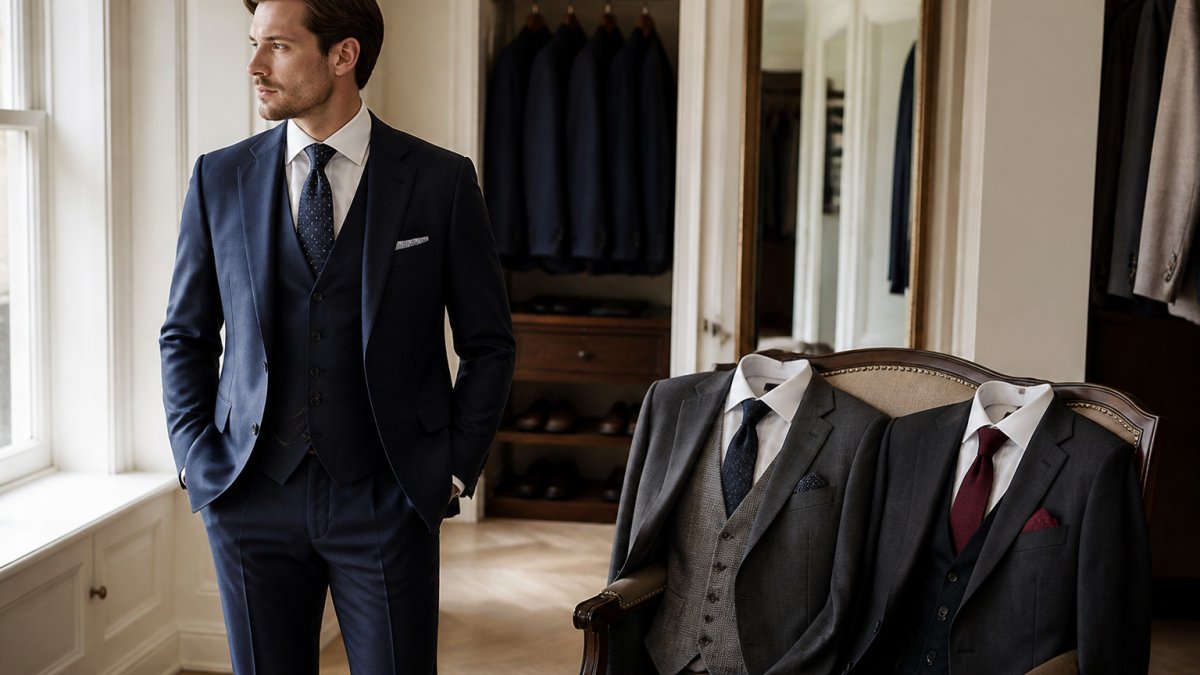
Formal outfit combinations work best when you build them around formulas rather than individual pieces. A formula lets you swap one element and change the entire register of the outfit.
Start with these three:
- The workhorse: navy suit, white shirt, mid-grey trousers as a separate, brown shoes
- The wedding guest: charcoal suit, light blue shirt, patterned tie, pocket square
- The evening: black suit, white shirt, black tie, cufflinks
Each formula uses pieces you already own from the checklist. That is the point of a capsule: the combinations multiply without the wardrobe growing.
Outfit Formulas for Interviews, Ceremonies, Business Events and Evenings
The same small set of garments can be tuned to each occasion by changing one or two elements. Here is how the formulas map to real events:
Black 556 Mens Formal Trousers- 556 →
- Job interview (conservative): navy suit, white shirt, mid-grey or navy tie, black or dark brown shoes. Keep the pocket square plain or omit it. The goal is to look considered, not memorable.
- Daytime wedding or ceremony: navy suit, pale blue shirt, patterned tie that picks up one accent colour, brown shoes. Swap the tie for an open collar and a pocket square for a relaxed reception.
- Business event or client dinner: charcoal suit, white shirt, no tie, pocket square. Add the waistcoat if the room is more formal; remove the jacket if it is not.
Fit and Tailoring: The Adjustments That Make a Capsule Versatile
Fit decides whether a formal capsule looks expensive. A well-fitted inexpensive suit beats an ill-fitting costly one every time, so budget for alterations before you budget for extra pieces.
The three adjustments that matter most are hem length, sleeve length and waist suppression. A hem that breaks once at the shoe, a sleeve that shows a quarter-inch of shirt cuff, and a waist taken in to follow your shape are usually the difference between "wearing a suit" and "wearing your suit."
Assess fit before you buy by checking the shoulder seam (it should sit at the edge of your shoulder, not past it), the jacket button (it should close without pulling), and the trouser rise (it should sit at your natural waist, not your hips).
Budget Planning and Cost Per Wear
Cost per wear is the number that matters. A suit worn to four events a year and kept for five years works out far cheaper per outing than a trend piece worn once.
A practical way to prioritise: list each piece by how many outfits it unlocks, then buy in that order. Our guide to caring for wool suits at home covers the nine steps that protect that investment between wears.
Men's Formal Accessories Guide for a Small Wardrobe
Accessories are where a small formal wardrobe gains range. A waistcoat, tie and pocket square can transform the same suit into three visibly different outfits, which is why we treat them as core pieces rather than extras.
Our budget wedding waistcoat, tie and pocket square guide covers how to coordinate these without overspending.
Cufflinks and a tie bar are worth adding once the basics are in place. They cost little and lift a plain shirt and suit into something that reads as considered.
Fit, Tailoring and Budget Planning That Keeps Costs Down
Fit decides whether a formal capsule looks expensive. A well-fitted inexpensive suit beats an ill-fitting costly one every time, so budget for alterations before you budget for extra pieces.
Factor in a tailor for hem length, sleeve length and waist suppression. These three adjustments are usually the difference between "wearing a suit" and "wearing your suit."
Cost per wear is the number that matters.
Shop the SimonVon Formal Capsule Pieces
Building the capsule is easier when the pieces are designed to work together. We stock the foundations: suits, dress shirts, formal trousers, and the waistcoats and accessories that give a small wardrobe its range.
Our formal trousers are available in black, navy and mid-grey at $49.90 each. The four-piece waistcoat, necktie, pocket square and cufflinks set is the fastest way to add a coordinated accent layer to a suit you already own.
Best for: men building a first formal capsule on a set budget. Skip if: you already own a full accessory rotation and only need one new piece.
Frequently Asked Questions
What should be in a formal capsule wardrobe for men?
A workable capsule starts with two suits in neutral colours, a navy and a charcoal or mid-grey, plus four to six dress shirts, three pairs of formal trousers, one waistcoat or vest set, and a small accessories kit of ties, cufflinks and pocket squares. Add one pair of polished leather shoes and a belt that matches. That base covers weddings, school balls, office attire and most black-tie-adjacent events, and every piece should mix with at least three others before you buy it.
How many suits should a man own for a versatile formal wardrobe?
Two suits cover most men for a full year: one navy and one charcoal or grey. If you attend weddings, galas or client meetings regularly, three suits give you a spare when one is at the dry cleaner. Beyond three, you get diminishing returns unless your work is formal every day. The better investment is in fit and fabric quality, since a well-tailored suit in a neutral colour does more for your look than a fourth suit in a bold shade you wear twice.
What colours are best for a formal capsule wardrobe?
Build around navy, charcoal, mid-grey and black, then add one or two accent colours you actually enjoy wearing, such as burgundy, forest green or a deep blue. A useful rule is roughly 80 percent neutrals to 20 percent accents, which keeps every outfit easy to combine. Neutral trousers and shirts do the heavy lifting, while accent ties, pocket squares and waistcoats let you change the look of the same suit for different occasions without buying more tailoring.
How should a formal capsule wardrobe fit?
Fit matters more than the label or the price. Jacket shoulders should sit at your natural shoulder line, the sleeve should show about 1cm of shirt cuff, and trousers should break lightly on the shoe with no pooling. Waistcoats should sit flat at the back with the adjustable strap doing the work. If a garment is close but not perfect, a local tailor can usually adjust the waist, hem and sleeves for a modest fee, which is cheaper than replacing the item.
How do you choose formal accessories that work with multiple outfits?
Pick accessories in colours already present in your capsule. A black or navy tie, a white or cream pocket square and silver or gold cufflinks will pair with nearly every suit you own. A four-piece waistcoat, tie, pocket square and cufflink set in a single coordinated colourway is an efficient way to add variety without guessing at combinations. Match metal tones to your watch and belt buckle, and keep patterns small so they work with both plain and textured shirts.
How can you create different outfits from a small formal wardrobe?
Swap one layer at a time. The same navy suit reads differently with a white satin shirt and no tie for a daytime wedding, with a waistcoat and patterned tie for a school ball, and with a black tie and pocket square for an evening event. Rotating trousers between suits, adding a waistcoat, or changing shoes and accessories gives you several distinct looks from a wardrobe of around 30 to 40 pieces, which is the point of a capsule.
The real challenge isn't finding formal wear; it's building a set that works together across every event on your calendar. SimonVon Shop stocks suits, dress shirts, formal trousers and coordinated waistcoat and accessory sets at prices that let you build the capsule in stages. Start with the pieces that cover your most frequent occasions, then add accents as your calendar demands. Get started with SimonVon Shop and build a formal wardrobe that's ready for the next invitation.
