
How to Choose a Waistcoat for a Tuxedo

Table of Contents
- Start With Your Dress Code and Jacket Style
- Step 1: Decide Between a Waistcoat and a Cummerbund
- Step 2: Know the Black Tie Waistcoat Rules
- Step 3: Pick Single-Breasted or Double-Breasted
- Step 4: Check the Tuxedo Waistcoat Fit
- Step 5: Choose Colour, Fabric and Pattern
- Common Mistakes to Avoid and Your Next Step
- Frequently Asked Questions
Last Updated: October 29, 2026
Learning how to choose a waistcoat for a tuxedo sounds simple until you stand in front of a mirror with three options and no clear idea which one works. Grooms, wedding guests and school leavers often ask this question when planning their formal look. The short answer is that the right waistcoat depends on your jacket, your dress code and how it fits your torso.
Start With Your Dress Code and Jacket Style
Your dress code decides almost everything else. A black tie invitation calls for a formal evening look, and a tuxedo with a matching waistcoat or cummerbund is the standard.
Check two things before you buy:
- Dress code: Is the event black tie, black tie optional, or smart formal?
- Jacket style: Does your tuxedo have a peak or shawl lapel, and is it single-breasted or double-breasted?
Your answers narrow the field quickly. A tuxedo with a shawl lapel pairs well with a classic single-breasted waistcoat. A double-breasted jacket usually needs a specific waistcoat style, which we cover in Step 3.
Step 1: Decide Between a Waistcoat and a Cummerbund
Both a waistcoat and a cummerbund cover the gap between your shirt and jacket. They do the same job, but they look and fit differently.
- Waistcoat: Gives a clean, continuous line from shirt to jacket. It is the more modern choice for weddings and gala events.
- Cummerbund: Adds a traditional touch and is quick to put on. It is a strong option when the dress code leans classic.
A waistcoat also works for a relaxed, layered look, while a cummerbund suits formal ceremonies. If you are unsure, choose the waistcoat. It looks sharp in photos and works with most tuxedo styles.
Step 2: Know the Black Tie Waistcoat Rules
Black tie has a few long-standing conventions. Following them keeps your look polished.
- Low-cut design: A traditional evening waistcoat sits low, showing a small amount of shirt front below it.
- Colour: Black, midnight blue and dark grey are the safest choices for formal events.
- Fabric: Satin, silk and jacquard add texture without shouting.
- Matching: The waistcoat should match the tuxedo's fabric sheen or complement it. Avoid pairing a shiny satin waistcoat with a matte wool tuxedo.
Watch out: a waistcoat that is too bright or too patterned can pull attention from the rest of the outfit. Keep bold prints for smart casual events.
Step 3: Pick Single-Breasted or Double-Breasted
Waistcoats come in two main cuts, and each suits a different jacket.
- Single-breasted waistcoats have one row of buttons. They suit most tuxedos, including single-breasted jackets with peak or shawl lapels.
- Double-breasted waistcoats have two rows of buttons and a more structured look. They pair well with double-breasted tuxedo jackets.
Best for: Single-breasted waistcoats suit most grooms and wedding guests. Skip if: Your jacket is double-breasted and the waistcoat is single-breasted, as the two styles can clash.
Step 4: Check the Tuxedo Waistcoat Fit
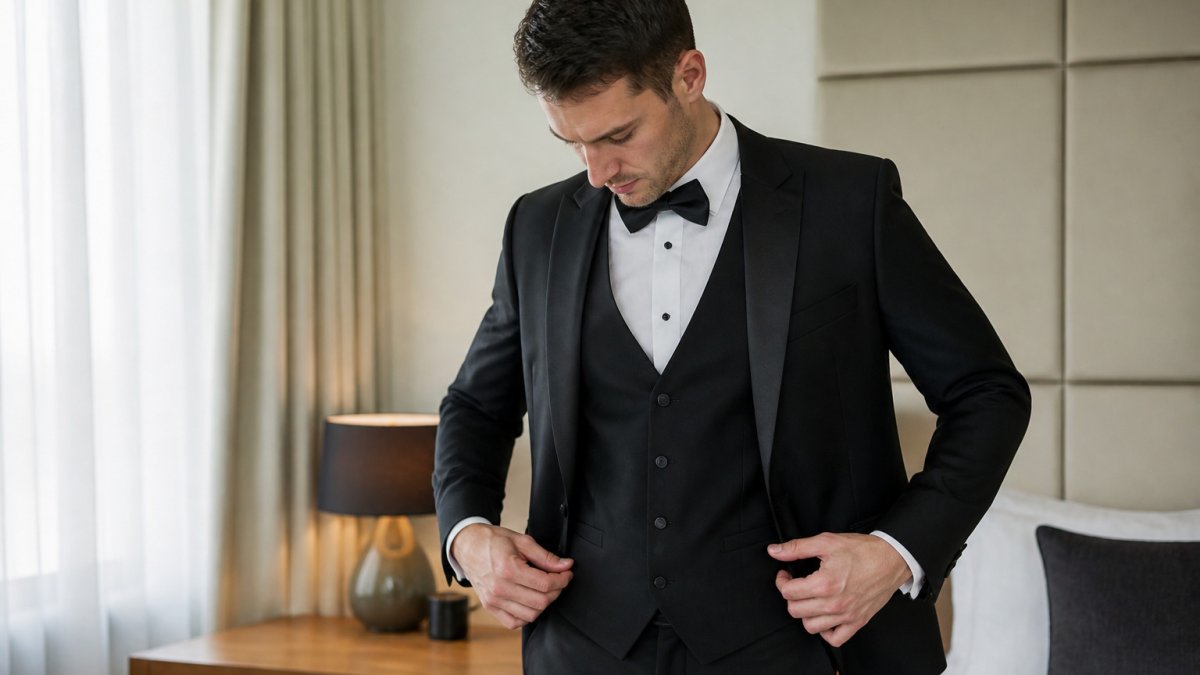
When you learn how to choose a waistcoat for a tuxedo, remember that fit matters more than colour or cut. A waistcoat that is too loose bunches and gaps, and one that is too tight pulls across the buttons. Most off-the-peg waistcoats are cut to a standard drop, so the fit pass below is where you win or lose the silhouette.
The four measurements that actually matter
Take these over a shirt and trousers, not over a t-shirt, and keep the tape snug but not tight:
- Chest: Measure around the fullest part of your chest, under the arms, keeping the tape level at the back.
- Natural waist: Measure around the narrowest part of your torso, roughly at the navel or just above it. This is not your trouser waistband measurement.
- Front length: Measure from the hollow at the base of your throat, down over the chest, to where you want the bottom point of the waistcoat to sit.
- Across the back: Measure shoulder seam to shoulder seam across the back, which tells you whether the armholes will sit correctly.
Compare these to the brand's own size chart rather than assuming your usual jacket size. Sizing varies noticeably between makers, and a waistcoat is a closer-fitting garment than a jacket, so a 2 cm difference at the waist is visible.
Button stance and the low-cut line
A traditional evening waistcoat is cut low, with a deep V that leaves a small triangle of shirt and tie visible above the fastened buttons. The top button should sit roughly at the level of your lower ribcage, not up near the sternum.
The bottom button of a single-breasted waistcoat is traditionally left undone, and the hem should finish at or just below the top of your trousers.
Armhole comfort
Raise both arms above your head and then bring them forward as if driving. The armholes should not dig into your armpits or drag the front of the waistcoat upward. High, close-cut armholes give more freedom of movement but need to be correctly sized; low, dropped armholes are more forgiving but can bunch under the jacket.
Tuxedo Waistcoat Silver Grey Solid Vest-BW-MD-0037 →
Troubleshooting the common fit faults
- Shirt showing at the waist when you move: The waistcoat is too short or too loose at the waist. Try a size down or have the side seams taken in.
- Waistband or belt visible below the hem: The front length is too short for your torso. Look for a longer cut or a made-to-measure option.
- Pulling across the buttons when seated: The waist is too tight. Let out the back strap or size up and tailor the chest.
- Gaping at the armhole: The armhole is too large or the chest is too broad for the cut. A tailor can reshape the armhole within limits.
- Back strap sitting proud: Adjust the strap so the back sits flat against the shirt; a loose strap lets the front ride up.
Measure your chest and waist before you buy, and check the size chart carefully. Sizing can vary between brands, so do not assume your usual size will match.
Step 5: Choose Colour, Fabric and Pattern
Colour and pattern set the tone of your outfit, but the decision is really about how the waistcoat relates to three other surfaces: the jacket lapel, the trousers and the shirt. Get that relationship right and almost any colour works.
Match the sheen, not just the shade
Black tie is built on a contrast between matte cloth and a satin or grosgrain facing on the lapel and trouser seam. Your waistcoat should sit on the same side of that contrast as the lapels:
- Satin or silk waistcoat: Pairs with satin-faced lapels and a satin bow tie. This is the classic evening combination.
- Matte wool waistcoat: Pairs with grosgrain or matte lapels. A matte waistcoat against shiny satin lapels can look flat in photos.
- Jacquard or textured silk: Adds depth without a high shine, and works when the lapel facing is subtle.
A common mistake is pairing a high-shine satin waistcoat with a matte wool tuxedo and no satin anywhere else. The waistcoat then looks like it belongs to a different outfit.
Matching versus contrasting
- Full match: The waistcoat is cut from the same cloth as the jacket and trousers. This is the most formal and the safest choice for black tie, because it creates one continuous line.
- Tonal contrast: A midnight blue waistcoat against a black tuxedo, or a charcoal waistcoat against black, adds depth without breaking the dress code. Keep the contrast within one or two shades.
- Deliberate contrast: Silver grey, deep burgundy or a subtle pattern. This suits weddings and galas where the dress code allows personality, but it moves you away from strict black tie.
Coordinating with the shirt and tie
Pick one element to carry the interest and keep the rest quiet:
- Patterned waistcoat, plain shirt, plain tie.
- Plain waistcoat, textured shirt (such as a marcella front), patterned bow tie.
- Patterned waistcoat and patterned tie only if the scales differ clearly, for example a large paisley against a small neat print.
A white shirt is the default for black tie. If you choose a coloured waistcoat, keep the shirt white so the waistcoat reads as the accent rather than competing with a coloured shirt.
Fabric choices and what they signal
| Fabric | Best for | Watch out for |
|---|---|---|
| Satin | Black tie, evening events | Shows creases and stains easily; needs pressing |
| Silk jacquard | Galas, school balls | Too busy with a patterned shirt |
| Matte wool | Grosgrain-lapel tuxedos, daytime formals | Can look flat against shiny lapels |
| Plain solid (black, silver grey) | Weddings, formal dinners | Can look plain without an accent |
| Matching set | Quick, coordinated styling | Limited mixing of colours |
Pattern guidance
Paisley and jacquard are the traditional patterned options for evening wear because they catch light without shouting. Keep the pattern small to medium; a large, high-contrast print reads as casual. If your tuxedo has a patterned lining or a strong lapel texture, choose a plain waistcoat so the two do not fight.
For a plain, versatile option, the Tuxedo Waistcoat Silver Grey Solid Vest-BW-MD-0037 is a useful reference point. The Dark Blue Solid Satin Waistcoat Vest Tie Handkerchief Cufflinks Set-MJ-0638 offers a satin option for a more formal sheen.


Keep your fabrics balanced. A silk waistcoat pairs well with a wool tuxedo, but two highly textured fabrics together can look busy.
Common Mistakes to Avoid and Your Next Step
A few errors show up again and again. Avoid these and your look will hold up in photos and on the dance floor.
- Buying by size label alone: Always check the measurement chart, as sizing varies.
- Mixing a patterned waistcoat with a patterned shirt: Choose one bold element and keep the rest plain.
- Ignoring the jacket cut: A double-breasted waistcoat over a single-breasted jacket looks mismatched.
- Leaving fit until the last minute: Order early so you have time to tailor if needed.
Your next step is simple. Confirm your dress code, check your jacket cut, measure your chest and waist, and then browse our waistcoat and vest sets to find a match. If you are shopping for a school ball or wedding party, order a few weeks ahead so everything arrives in time.
Frequently Asked Questions
Should you wear a waistcoat with a tuxedo?
A waistcoat is a traditional and appropriate choice with a tuxedo, especially for formal evening events, weddings and galas. It covers the waistband of your trousers and gives a clean, continuous line from jacket to shirt. Many men choose a waistcoat over a cummerbund because it looks more streamlined under a single-breasted jacket. If your tuxedo jacket is double-breasted, a waistcoat is usually the more natural pairing. Wearing one is optional at most events, but when you do wear one, make sure the fit and colour are correct so it looks deliberate rather than an afterthought.
What colour waistcoat should you wear with a black tuxedo?
Black is the classic choice and works with almost any black tuxedo, particularly for formal dinners and black-tie weddings. Midnight blue and dark grey are also suitable and can add subtle interest without breaking the dress code. Silver grey, as in the Tuxedo Waistcoat Silver Grey Solid Vest-BW-MD-0037 at SimonVon Shop for $92.00, gives a more contemporary look for evening events. Keep the waistcoat in the same colour family as your tie and pocket square so the outfit looks coordinated.
Should a tuxedo waistcoat match the jacket?
A tuxedo waistcoat does not have to match the jacket exactly, but it should suit it. A black waistcoat with a black jacket is the safest and most traditional pairing. A satin or silk waistcoat in a dark blue, such as the Dark Blue Solid Satin Waistcoat Vest Tie Handkerchief Cufflinks Set-MJ-0638 for $92.00, can also work well with a black jacket if you want a touch of colour. Avoid waistcoats that clash in sheen or tone with the jacket, as the mismatch is more noticeable than the colour itself.
How should a waistcoat fit under a tuxedo?
The waistcoat should sit close to the body without pulling or gapping. It should sit neatly at the natural waist, cover the waistband of your trousers, and stay flat across the shirt when you button it. If you can see the shirt pulling between buttons, the fit is too tight. Check that the back adjusts properly and that the lower point finishes at or just above the waistband. Bring your jacket to any fitting so you can see how the two sit together.
