
How to Clean Sterling Silver Cufflinks Safely at Home
Last Updated: November 11, 2026
Quick Summary
Clean sterling silver cufflinks by soaking them two minutes in lukewarm water with one or two drops of mild dishwashing liquid, brushing gently, rinsing, then buffing dry with a lint-free cloth. Avoid bleach, scouring pads and hot water, which can scratch the metal or loosen glue.
- Check for a 925 or STERLING stamp to confirm the piece is at least 92.5% silver.
- Soak cufflinks for about two minutes, no longer than necessary.
- Never use a metal brush on sterling silver, as it leaves fine scratches.
- Use a dry silver polishing cloth for light tarnish, and baking soda paste for heavier tarnish.
- Store cufflinks in a dry, sealed box, wrapped separately, away from humid bathrooms.
Table of Contents
- Identify Your Cufflinks Before You Clean Them
- What You Need and What to Avoid
- Step-by-Step: Gentle Cleaning With Mild Soap and Lukewarm Water
- How to Remove Tarnish From Silver Cufflinks
- Cleaning Cufflinks With Gemstones, Enamel and Detailed Backs
- Using a Silver Cufflinks Cleaning Cloth Correctly
- How to Store Sterling Silver Cufflinks to Prevent Tarnish
- When to Take Your Cufflinks to a Professional in Auckland
- Frequently Asked Questions
Identify Your Cufflinks Before You Clean Them
Cleaning the wrong material can ruin a pair of clean sterling silver cufflinks in a single afternoon. It is a good idea to check what your cufflinks are made of before you reach for any cloth or cleaner. Sterling silver is usually marked, and the marking tells you a lot about what gentle care looks like.
Checking for 925 Stamps and Finish
Turn each cufflink over and look for a small stamp on the back, the post, or the clasp. A stamp reading "925" or "STERLING" means the piece is at least 92.5% silver. Sterling silver tarnishes over time, so a dull look is common and does not mean the piece is fake.
Check the finish as well. A bright, even shine suggests a polished surface, while a matte or brushed look may need a softer touch to protect the texture.
Spotting Gold Vermeil and Plated Pieces
Some cufflinks look like silver but are really gold vermeil or silver plate. Vermeil is sterling silver with a gold layer on top, and plated pieces have a thin coating over a base metal. Harsh rubbing can wear through both, so treat them more gently than solid sterling silver.
Look closely at worn edges. If you see a different colour underneath, the coating is thin, and you should avoid abrasive cloths and dips.
What You Need and What to Avoid
You do not need many supplies to clean silver cufflinks well. Gather these before you start:
- A bowl of lukewarm water
- A small drop of mild dishwashing liquid
- A soft, lint-free cloth
- A soft-bristled brush for tight details
- A dedicated silver polishing cloth
Avoid these common mistakes:
- Chlorine bleach, which can damage metal and stones
- Rough scouring pads or steel wool, which scratch the surface
- Hot water, which can loosen glue in enamel or stone settings
- Dropping cufflinks into a sink without a towel below them
Step-by-Step: Gentle Cleaning With Mild Soap and Lukewarm Water
This method handles everyday dust, fingerprints and light grime. Work through the steps in order.
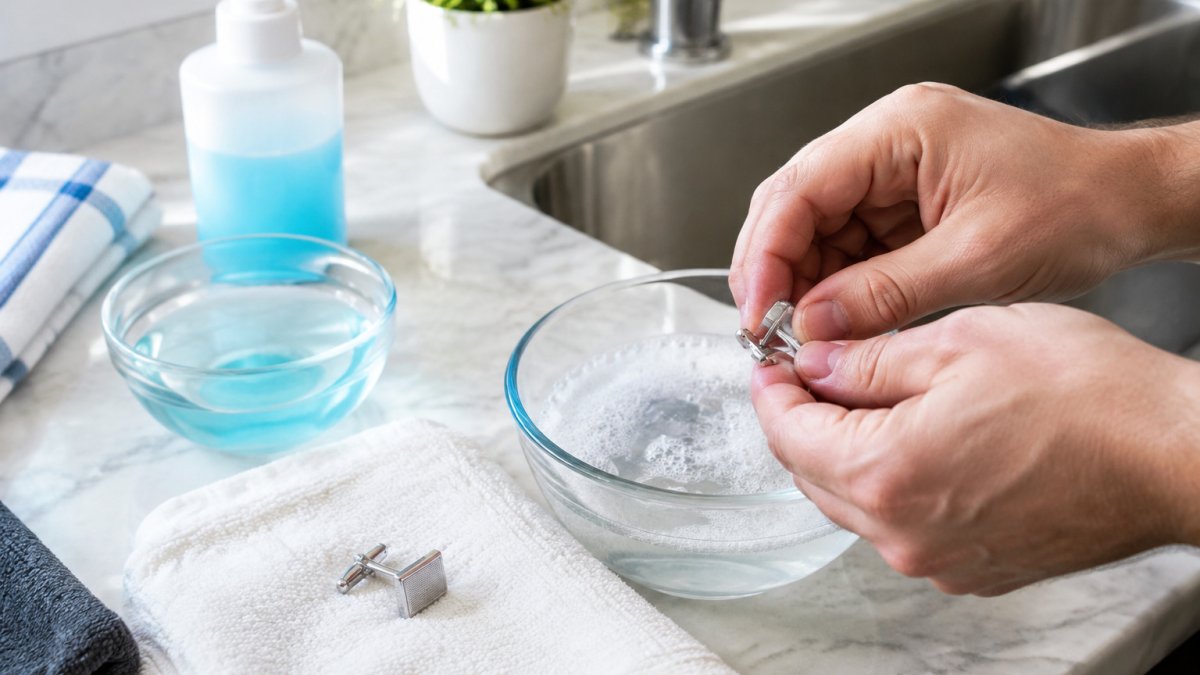
- Lay a soft towel on your work surface so nothing slips into the sink.
- Fill a small bowl with lukewarm water and add one or two drops of mild dishwashing liquid.
- Soak the cufflinks for about two minutes. Do not soak longer than necessary.
- Gently brush the faces and backs with the soft-bristled brush, working into the edges.
- Rinse each piece under lukewarm running water.
- Pat dry and then buff with a clean, lint-free cloth.
Watch out: Never use a metal brush on sterling silver, as it leaves fine scratches that show up in strong light.
The gentle method suits everyday dust and grime, and each step has a clear purpose.
| Step | What to do | Time or frequency |
|---|---|---|
| 1 | Lay a soft towel on the work surface | Before you start |
| 2 | Add one or two drops of mild dishwashing liquid to lukewarm water | Before you start |
| 3 | Soak the cufflinks | About two minutes |
| 4 | Brush faces and backs with a soft-bristled brush | Work into the edges |
| 5 | Rinse under lukewarm running water | Once |
| 6 | Pat dry, then buff with a lint-free cloth | Until dry |
How to Remove Tarnish From Silver Cufflinks
Tarnish is a thin layer of silver sulphide that forms when clean sterling silver cufflinks react with sulphur compounds in the air. The right removal method depends on two things: how dark the tarnish is, and what else is on the cufflink. Work from the gentlest option upwards, and stop as soon as the tarnish lifts, every step beyond that removes a little more silver.
Step 1: Decide How Heavy the Tarnish Is
Hold the cufflink under good light. A faint yellow or pale brown film is light tarnish and almost always responds to a dry polishing cloth. A dark brown or black layer, or tarnish settled into engraving, is heavier and needs a paste or a commercial silver cleaner. If the tarnish is patchy and follows the edges, the finish may be wearing rather than tarnishing, and polishing will not fix it.
Step 2: Match the Method to the Cufflink
- Plain sterling silver, no stones or enamel: a dry silver polishing cloth for light tarnish; a baking soda paste or a commercial silver cleaner for heavier tarnish.
- Sterling silver with glued stones, mother-of-pearl, or enamel: polishing cloth only. Skip pastes, dips, and soaking, because they reach the adhesive and the stone edges.
- Gold vermeil or plated cufflinks: polishing cloth only, used lightly. Abrasive pastes and dips cut through the thin gold layer and expose the silver or base metal underneath.
- Cufflinks with moving toggles or chains: a paste is workable if you rinse and dry thoroughly afterwards, but a dip is risky because liquid stays in the joints.
Step 3: Use the Polishing Cloth Correctly
Rub the silver with straight, light strokes rather than circles, turning the cloth to a clean section as it greys. A silver polishing cloth is generally used dry, so do not wet it. Finish by buffing with a separate dry, lint-free cloth. Keep one cloth for silver only; grit from other jewellery will scratch a polished face.
Step 4: Heavier Tarnish With a Baking Soda Paste
Mix baking soda with a few drops of water to a paste about the consistency of toothpaste. Apply it with a soft cloth, work it gently into the tarnished areas, and keep it off stones, enamel, and plated edges.
Watch out: Do not use the aluminium-foil-and-baking-soda bath that circulates online on cufflinks with stones, enamel, or glued parts, the liquid reaches the adhesive and the stone edges, and the method offers no advantage over a paste on a small piece like a cufflink.
Step 5: Commercial Silver Cleaners
A commercial silver cleaner, whether a dip, a liquid, or an impregnated wad, is one option for heavy tarnish on plain sterling silver. Follow the label exactly, test on the back of one cufflink first, and keep the contact time to the minimum stated. Dips are the least suitable option for cufflinks because the liquid enters every joint and setting; if you use one, rinse thoroughly and dry the mechanism before storing the pair.
What Not to Use
Avoid abrasive powders and scouring pads, which scratch the surface; chlorine bleach, which attacks the metal and many stones; and hot water, which softens adhesive and stresses enamel. If gentle methods have not lifted the tarnish after two attempts, the piece is a candidate for a jeweller rather than a stronger home remedy.
Cleaning Cufflinks With Gemstones, Enamel and Detailed Backs
Cufflinks are not a single object, they are a small assembly, and the cleaning method has to suit every part of that assembly, not just the silver face. For guidance on caring for other delicate formal garments and fabrics that need gentle handling, see home care for wool suits and delicate fabrics. Before you clean a pair with stones, enamel, or a detailed back, identify how each component is held in place, because a method that is safe for solid sterling silver can loosen a glued stone or cloud an enamel panel.
How the Setting Changes the Method
Most cufflink stones fall into two groups. A bezel-set or prong-set stone is held mechanically by metal, so brief contact with lukewarm soapy water is usually tolerable as long as you dry the piece immediately and do not soak it. A glued stone, common on lower-cost dress sets and on some mother-of-pearl faces, relies on adhesive that softens in warm water and weakens with repeated soaking.
Enamel is glass fused onto the silver at high temperature. The enamel itself tolerates water, but the bond at its edge can chip if the piece is knocked, and hot water or sudden temperature change stresses that edge.
Working Around Moving Parts and Detailed Backs
A toggle, chain, or hinged back has small gaps where water and cleaner collect. Those gaps are also where tarnish hides, so a soft-bristled brush is useful, but the piece must be dried thoroughly afterwards, a hair dryer on a cool setting held at a distance, or a lint-free cloth worked into the joint, will shift trapped moisture.
For engraved or engine-turned backs, use the soft brush in the direction of the grooves and rinse sparingly. Cleaner left in deep engraving dries to a white residue that is harder to remove than the original tarnish.
A Simple Rule for Mixed-Material Cufflinks
When a pair combines sterling silver with onyx, mother-of-pearl, enamel, or a plated accent, clean the whole piece as if it were the most delicate component. That usually means a dry silver polishing cloth for the silver areas, a barely damp cloth for the stone or enamel, and no dips, pastes, or ultrasonic cleaning. If a stone feels loose or an enamel edge looks lifted, stop and have a jeweller check it before wearing the pair again.
Using a Silver Cufflinks Cleaning Cloth Correctly
A silver cufflinks cleaning cloth works best when you use it dry or lightly dampened. Rub gently in one direction, then fold the cloth to a clean section. Replace the cloth once it looks grey, because a dirty cloth can drag tarnish back onto the metal. Keep one cloth for silver only, so grit from other jewellery does not scratch your pieces.
How to Store Sterling Silver Cufflinks to Prevent Tarnish
Storage does more to prevent tarnish than any cleaning method. Keep cufflinks in a dry, sealed box or a small pouch. Humid bathrooms and damp wardrobes speed up tarnishing, so store your cufflinks in a bedroom drawer instead. Wrap each pair separately so the metal surfaces do not rub together.
When to Take Your Cufflinks to a Professional in Auckland
Some problems are best left to a specialist. Take your cufflinks to a qualified jeweller if a stone is loose, enamel is chipping, a clasp is bent, or the tarnish will not lift after gentle cleaning.
Your sterling silver cufflinks deserve careful handling for every formal event. Browse our curated range at SimonVon Shop to find pieces that suit your next occasion, and keep them looking their best with the simple routine above.
Frequently Asked Questions
How do you clean sterling silver cufflinks at home?
Use a bowl of lukewarm water with a few drops of mild dishwashing liquid. Soak the cufflinks for a few minutes, then gently brush the surface with a soft-bristled brush, paying attention to the grooves and the back fittings. Rinse under lukewarm water, dry thoroughly with a lint-free cloth, and buff gently. Avoid soaking cufflinks that have gemstones or enamel for long periods, and keep the posts and clasps dry to prevent corrosion.
Can you clean sterling silver cufflinks with baking soda?
Yes, a paste of baking soda and water can lift heavier tarnish from plain sterling silver. Apply it with a soft cloth, rub lightly, then rinse thoroughly and dry. Do not use baking soda on gemstones, pearls, enamel or gold vermeil, because the abrasion can scratch or dull the surface. Test a small hidden area first, and skip the paste on any cufflinks with delicate finishes.
How should sterling silver cufflinks be stored to prevent tarnishing?
Keep them in a dry, airtight pouch or a lined jewellery box with a tarnish-resistant strip. Store them away from humid bathrooms and kitchens, and wipe them with a soft cloth after wearing. Separating each pair stops the metal rubbing and scratching, and reduces the chance of tarnish spreading between pieces.
When should you take silver cufflinks to a professional jeweller?
Take them to a qualified jeweller if they have deep tarnish that home methods do not shift, loose or broken fittings, damaged gemstones or enamel, or worn plating on gold vermeil pieces. A professional can polish, repair and re-plate safely without damaging the finish.
