
How to Match Ties With Suits: A Guide

Table of Contents
- Understanding Colour Theory for Tie and Suit Matching
- The Rule of Contrast: Darker Ties on Lighter Shirts
- Matching Patterns: Stripes, Checks, and Solids
- Proportion and Scale: Tie Width vs. Lapel Width
- Shirt and Tie Colour Combinations Guide
- Best Mens Formal Accessories and How to Coordinate Them
- When to Wear a Pocket Square and Other Styling Tips
- Common Mistakes to Avoid When Matching Ties to Suits
Last Updated: August 24, 2026
Understanding Colour Theory for Tie and Suit Matching
Matching ties with suits starts with understanding how colours work together. The foundation is the colour wheel, which shows how colours relate to one another and determines how they interact visually.
The colour wheel and complementary colours
Complementary colours sit directly opposite each other on the colour wheel, navy blue opposite orange, or deep red opposite teal. These combinations create maximum visual contrast and work best for occasions where you want to make a statement: creative industries, fashion-forward events, or confident personal style. For conservative business environments or formal black-tie events, they can read as too loud.
Analogous colours sit next to each other on the wheel, navy blue with teal, or charcoal with burgundy. These combinations feel cohesive and sophisticated because they share similar undertones and don't clash. This is why analogous pairings are the safest choice for professional settings and formal events.
Warm tones, cool tones, and neutral combinations
Every colour has a temperature. Warm tones include reds, oranges, yellows, and warm browns. Cool tones include blues, greens, purples, and cool greys. The golden rule: don't mix warm and cool tones unless you're intentionally creating contrast. A warm grey suit pairs well with a warm burgundy tie, whilst cool grey works with a cool silver tie.
Neutral combinations are your safest bet. A charcoal suit works with almost any tie colour because charcoal is temperature-neutral. Black suits are equally versatile. This is why neutral base colours, black, charcoal, navy, or grey, are so popular in formal menswear.
The Rule of Contrast: Darker Ties on Lighter Shirts
The shirt matters as much as the suit. Create contrast between your shirt and tie: a light blue shirt needs a darker tie, whilst a dark charcoal shirt needs a lighter tie like silver, light blue, or cream. A white shirt works with almost any tie colour because white provides maximum contrast.
Why does contrast matter? Your eye needs visual separation to distinguish between garments. When your shirt and tie are similar in colour and value, they blur together and the outfit looks muddy. Contrast creates definition and polish.
A white shirt with a navy tie on a charcoal suit always works. A charcoal shirt with a light silver tie on a charcoal suit also works because the tie breaks up the monotony. But a light blue shirt with a light blue tie on any suit looks accidental.
Matching Patterns: Stripes, Checks, and Solids
Pattern coordination creates sophistication and visual interest when done correctly. The rule: if your suit has a pattern, wear a solid tie. If your shirt has a pattern, wear a solid tie. If both your suit and shirt are solid, you can wear a patterned tie. Never combine two patterns on the person wearing the outfit.
Solid ties are your foundation. A quality silk tie in a single colour works with almost any suit-and-shirt combination. Build a collection in navy, burgundy, charcoal, silver, and blush.

Striped ties add visual interest without overwhelming the outfit. Vertical stripes elongate the torso. When wearing a striped tie, keep your suit and shirt solid.
Checked and micro-patterned ties work similarly to stripes. A large checked pattern needs breathing room with solid suit and shirt. A micro-pattern tie is more forgiving.
The simple rule: one pattern per outfit. Choose whether your pattern is on the suit, the shirt, or the tie. Keep the other two solid.
Proportion and Scale: Tie Width vs. Lapel Width
Tie width must be proportional to your lapel width. Lapel width is the distance from the edge of the lapel to the centre button of your jacket. Modern suit lapels typically range from 7.5 to 10 centimetres.
Tie blade width should be roughly 80-90% of your lapel width. For most men in modern suits, a tie blade width of 7 to 9 centimetres is ideal. A narrow tie on a wide lapel looks skinny and unbalanced. A wide tie on narrow lapels overwhelms the outfit.
Your tie should reach your belt buckle, not shorter or longer. Standard tie length is around 145 centimetres, but if you're taller than 1.88 metres, look for extended lengths.
Shirt and Tie Colour Combinations Guide
Classic combinations for formal events
White shirt, navy tie: The foundation of formal menswear. Maximum contrast, timeless colours. It always works.
White shirt, burgundy tie: A step warmer than navy, burgundy adds sophistication without sacrificing formality. Perfect for weddings, galas, and formal dinners.
Light blue shirt, navy tie: The most popular pairing in business professional settings. Clear contrast with analogous colour harmony.
Pale pink shirt, navy tie: A subtle variation that adds personality whilst maintaining formality. Works well for weddings and upscale events.
Business professional pairings
Light grey shirt, charcoal tie: Sophisticated and understated. The contrast between light and dark creates definition.
White shirt, silver tie: Modern and clean. Silver is neutral enough for any business setting.
Pale blue shirt, burgundy tie: Slightly bolder but still professional. The warm burgundy against cool blue creates interest without clashing.
At SimonVon Shop, we've curated collections of ties specifically designed to work with these proven combinations. Our silk ties in classic colours are cut to modern proportions that work with contemporary suits. The Gold and Teal Men's Silk Tie handkerchief Cufflinks set offers a sophisticated alternative for those ready to move beyond basics, the teal adds visual interest whilst remaining professional, and the matching cufflinks and handkerchief create a coordinated, polished appearance.
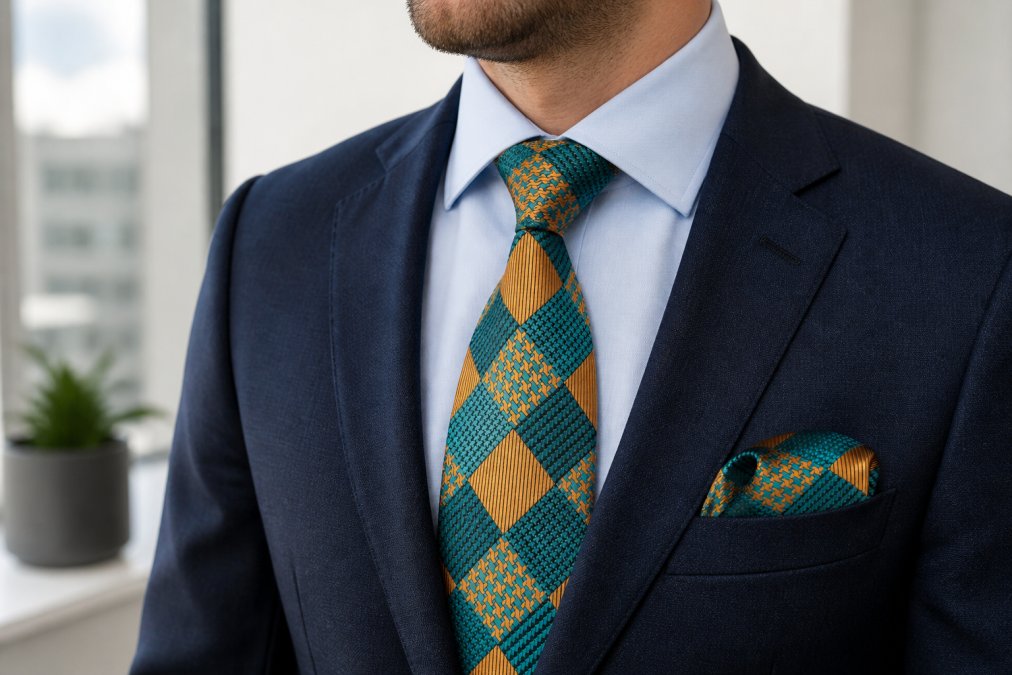
Best Mens Formal Accessories and How to Coordinate Them
A tie is one piece of the formal accessories puzzle. Cufflinks, pocket squares, and tie bars work together to create a complete, intentional look.
Choosing the right tie knot for your collar
Your collar shape determines which tie knots work best.
Point collar (the most common modern collar) works with almost any tie knot, including the four-in-hand and half-Windsor.
Spread collar has a wider angle between the points and demands a larger knot, a full Windsor or Pratt knot. A small four-in-hand knot looks proportionally wrong.
Button-down collar typically works with smaller knots like the four-in-hand. It's rarely seen in formal settings.
Cutaway collar (extreme spread) is formal and dramatic, requiring a large, symmetrical full Windsor knot.
The four-in-hand knot is the most practical choice for most men. It's relatively small, works with most collar types, and creates a clean, tapered silhouette.
The Windsor knot is larger and more symmetrical, creating a triangular shape. It works best with spread collars and formal occasions.
Fabric texture and seasonal suit materials
Silk ties are the standard for formal occasions. Silk has natural lustre, drapes well, and feels luxurious ([EXTERNAL_LINK: research on silk properties | ncbi.nlm.nih.gov]). For weddings, black-tie events, and formal business settings, silk is the expected choice.
Wool ties are heavier and more textured. They work better in autumn and winter with heavier suit fabrics. Wool ties are less formal than silk, making them suitable for business casual and creative professional settings.
Knit ties are casual and textured. They work with relaxed suit styles and are popular in creative industries. Knit ties are rarely appropriate for formal events but perfect for business casual.
Your suit fabric should guide your tie choice. A lightweight summer suit pairs beautifully with a silk tie in a light colour. A heavy winter wool suit works with silk or wool ties in richer colours.

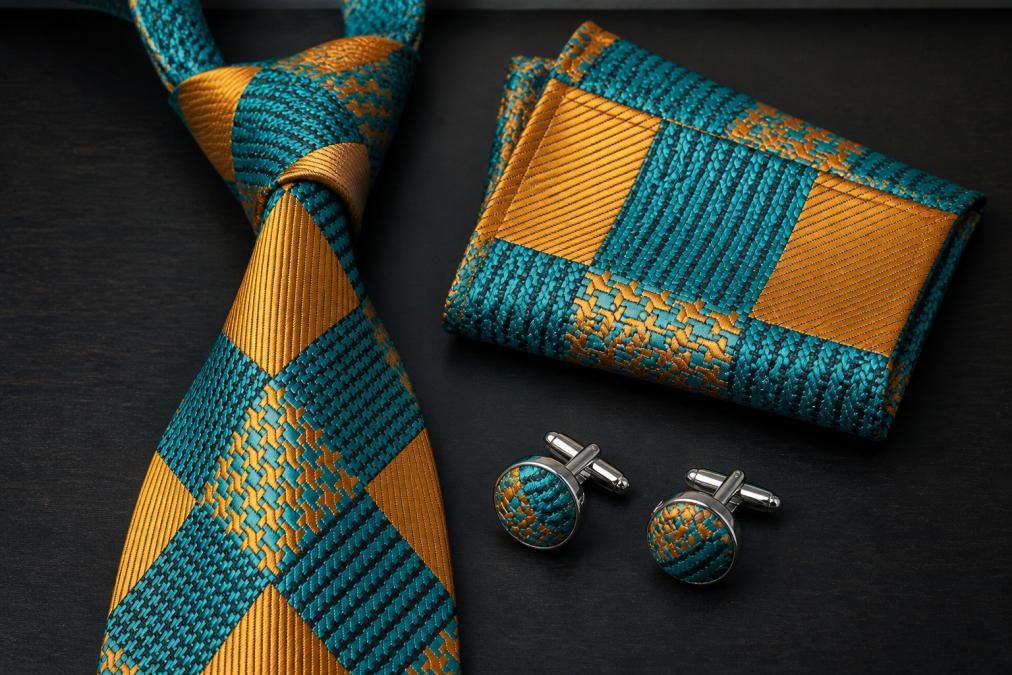
When to Wear a Pocket Square and Other Styling Tips
A pocket square is a small piece of fabric worn in the breast pocket of a suit jacket. It's optional, but when worn correctly, it elevates your entire appearance.

Formal occasions (black-tie events, weddings, galas) are where pocket squares are most expected. A white linen pocket square is the traditional choice for black-tie events.
Matching your pocket square to your tie is the most common approach. If your tie is navy with a subtle pattern, your pocket square should echo that colour or pattern. The Pink Solid Silk Men's Tie Pocket Square Cufflinks Set demonstrates this principle, the matching set ensures perfect coordination.
Contrasting your pocket square is a bolder move. A white pocket square with a navy tie creates contrast and visual interest. This approach requires more style confidence but looks intentional and polished.
Fold your pocket square so only the tip shows, about half an inch of fabric visible above the pocket. A simple triangle fold is the most elegant.
Cufflinks are essential for formal occasions when wearing French cuff shirts. They're optional with standard button cuffs but add polish and sophistication. Match your cufflinks to your tie or pocket square for a coordinated look.
Tie bars keep your tie in place and add a subtle detail. Wear it at roughly the midpoint of your tie. Silver or gold tie bars work with almost any outfit.
Common Mistakes to Avoid When Matching Ties to Suits
Matching your tie to your suit exactly creates a flat, monotonous look. A navy suit with a navy tie lacks visual separation. Choose a tie in a different colour or shade.
Ignoring shirt-tie contrast is equally problematic. A light blue shirt with a light blue tie blurs together. Always ensure contrast between your shirt and tie.
Wearing a tie that's too short or too long is surprisingly common. Your tie should reach your belt buckle. A tie that's too short looks like you've outgrown it. A tie that's too long looks sloppy.
Pairing a wide tie with narrow lapels creates a proportional mismatch. Conversely, a narrow tie on wide lapels looks skinny and unbalanced.
Combining too many patterns is overwhelming. Stick to one pattern per outfit.
Using poor-quality fabric undermines everything else. Invest in ties made from natural fibres, silk, wool, or quality blends. The fabric should feel substantial and drape well.
Neglecting seasonal appropriateness is a subtle mistake. Lightweight silk ties in pale colours work for summer. Heavy wool ties in rich colours are perfect for autumn and winter.
This is why SimonVon Shop prioritises silk ties, they maintain their appearance through repeated wear and cleaning, representing genuine value for money.
Matching ties with suits is fundamentally about understanding three principles: contrast between shirt and tie, proportion between tie and lapel, and colour harmony across all three garments. When you internalise these rules, you'll make confident decisions without overthinking. At SimonVon Shop, we stock a comprehensive range of premium silk ties, cufflinks, and pocket squares specifically designed to coordinate seamlessly with contemporary suits. Whether you're preparing for a wedding, a school ball, or a professional event, our curated collections ensure you'll find pieces that work together beautifully. Shop our formal accessories collection and discover how easy it is to look polished and intentional.
=== FAQ ANSWERS (audit these too, same rules) ===
[1] Q: What should your tie match in a suit? A: Your tie should complement your shirt first, then harmonise with your suit jacket. The tie typically contrasts with the shirt (darker tie on lighter shirt) whilst echoing a colour from the suit or adding visual interest through complementary colours on the colour wheel. The tie blade width should also proportion to your lapel width and shirt collar spread for balanced visual harmony.
[2] Q: Should a tie be darker or lighter than the shirt? A: A tie should generally be darker than the shirt to create the contrast ratio needed for visual balance. A dark tie on a light shirt is the standard formal rule and creates a clean, professional appearance. Avoid pairing a light tie with a light shirt, as this flattens your silhouette. The darker tie draws the eye and anchors your outfit.
[3] Q: When to wear a pocket square with formal wear? A: Wear a pocket square for black-tie galas, weddings, and formal events where you want to add sophistication. A pocket square complements your tie and cufflinks to complete your formal accessories ensemble. Match it to your tie's colour scheme or choose a complementary shade. For business professional settings, a pocket square is optional but elevates your look; for smart casual, skip it.
[4] Q: How do I choose a tie for a wedding suit? A: For a wedding, choose a tie that complements the formality of the event. Select a colour that contrasts with your shirt and harmonises with your suit, jewel tones, pastels, or neutrals work well depending on the season and time of day. Avoid bright neons or clashing patterns. Silk ties in solid colours or subtle micro-patterns are ideal. Consider coordinating with a pocket square and cufflinks from a formal accessories set for a complete, polished look.
Frequently Asked Questions
What should your tie match in a suit?
Your tie should complement your shirt first, then harmonise with your suit jacket. The tie typically contrasts with the shirt (darker tie on lighter shirt) whilst echoing a colour from the suit or adding visual interest through complementary colours on the colour wheel. The tie blade width should also proportion to your lapel width and shirt collar spread for balanced visual harmony.
Should a tie be darker or lighter than the shirt?
A tie should generally be darker than the shirt to create the contrast ratio needed for visual balance. A dark tie on a light shirt is the standard formal rule and creates a clean, professional appearance. Avoid pairing a light tie with a light shirt, as this flattens your silhouette. The darker tie draws the eye and anchors your outfit.
When to wear a pocket square with formal wear?
Wear a pocket square for black-tie galas, weddings, and formal events where you want to add sophistication. A pocket square complements your tie and cufflinks to complete your formal accessories ensemble. Match it to your tie's colour scheme or choose a complementary shade. For business professional settings, a pocket square is optional but elevates your look; for smart casual, skip it.
How do I choose a tie for a wedding suit?
For a wedding, choose a tie that complements the formality of the event. Select a colour that contrasts with your shirt and harmonises with your suit, jewel tones, pastels, or neutrals work well depending on the season and time of day. Avoid bright neons or clashing patterns. Silk ties in solid colours or subtle micro-patterns are ideal. Consider coordinating with a pocket square and cufflinks from a formal accessories set for a complete, polished look.
This article was written using GrandRanker