How to Match Waistcoat Colours: A 2026 Guide

Table of Contents
- Understanding Colour Theory for Waistcoat Matching
- Matching Waistcoat Colours with Your Suit Jacket
- Best Mens Formal Accessories for Waistcoat Styling
- Waistcoat and Tie Colour Combinations That Work
- Formal Waistcoat Etiquette and Styling Rules
- Choosing the Right Fit and Fabric for Colour Impact
- Sustainable and Vintage Waistcoat Sourcing
- Conclusion
Last Updated: August 18, 2026
Understanding Colour Theory for Waistcoat Matching
Matching waistcoat colours effectively starts with understanding how colours interact on the colour wheel. The most successful looks follow two primary approaches: complementary colours (opposite on the wheel, creating contrast) and monochromatic schemes (variations of the same hue, creating harmony).
Complementary vs. Monochromatic Approaches
Complementary colour pairing creates dynamic visual interest. A burgundy waistcoat with a navy suit jacket exemplifies this principle. The contrast draws the eye and creates a sophisticated, fashion-forward appearance. This approach works especially well for formal events where you want to stand out, but demands precision, one wrong shade and the contrast becomes jarring rather than elegant.
Monochromatic schemes create harmony through subtle gradation. A charcoal suit jacket paired with a slightly lighter grey waistcoat establishes visual continuity. This approach feels more traditional and is often preferred for conservative business environments or classic wedding styling. It's more forgiving and works across a wider range of skin tones and lighting conditions.
Skin Tone Considerations
Your skin tone determines which colours will make you look vibrant or washed out. Warm skin tones (golden, peachy, or olive undertones) are flattered by burgundy, rust, bronze, warm greys, and rich golds. Cool skin tones (pink, red, or blue undertones) shine in navy, emerald, cool purples, silver-greys, and charcoal. Neutral skin tones can wear both effectively, but look most polished when the entire outfit stays within the same temperature range.
The insider tip: hold fabric samples next to your neck in natural daylight, not artificial store lighting. You'll immediately see whether a colour brightens your complexion or dulls it.
Matching Waistcoat Colours with Your Suit Jacket
The suit jacket is your foundation. The waistcoat must either complement or coordinate with it, there's no neutral middle ground.
Contrast vs. Coordination
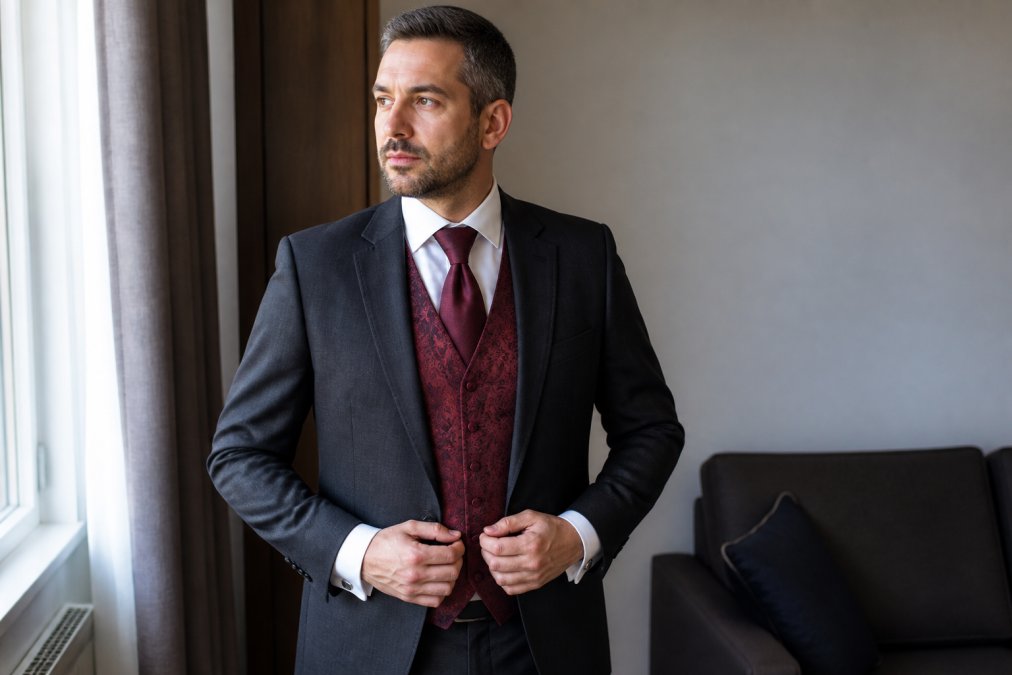
Contrast matching introduces a distinctly different colour from your suit jacket. A navy suit jacket with a burgundy waistcoat creates intentional visual separation. The key is ensuring both colours have similar depth (saturation and value). A deep burgundy with a deep navy reads as sophisticated; a pale burgundy with deep navy reads as a mistake.
Coordination matching keeps the waistcoat within the same colour family as the jacket but in a different shade. A charcoal suit jacket with a lighter grey waistcoat creates visual flow. This approach feels more conservative and works across more formal contexts. Most men default to coordination because it feels safer, but contrast matching, when executed correctly, separates a memorable formal look from a standard one.
Neutral Tones and Bold Patterns
Neutral waistcoats, charcoal, grey, navy, black, and cream, pair with virtually any suit jacket without risk. Bold patterned waistcoats introduce visual interest through texture and design rather than pure colour contrast. A paisley waistcoat in jewel tones or a subtle check pattern adds sophistication without the commitment of a solid bold colour.
When wearing a bold patterned waistcoat, keep your suit jacket, tie, and shirt relatively simple. Let the waistcoat be the statement piece. A paisley waistcoat with a patterned tie creates visual chaos; a paisley waistcoat with a solid tie creates intentional focus.
Best Mens Formal Accessories for Waistcoat Styling
The waistcoat is part of a coordinated ensemble. Your tie, pocket square, cufflinks, and shirt colour must work together.
Coordinating Ties and Pocket Squares
Your tie bridges the waistcoat and suit jacket. Choose a tie that either echoes a colour from the waistcoat or complements the overall colour scheme. A burgundy waistcoat pairs beautifully with a burgundy tie for unity, or with a navy tie if you want the waistcoat to remain the focal point.

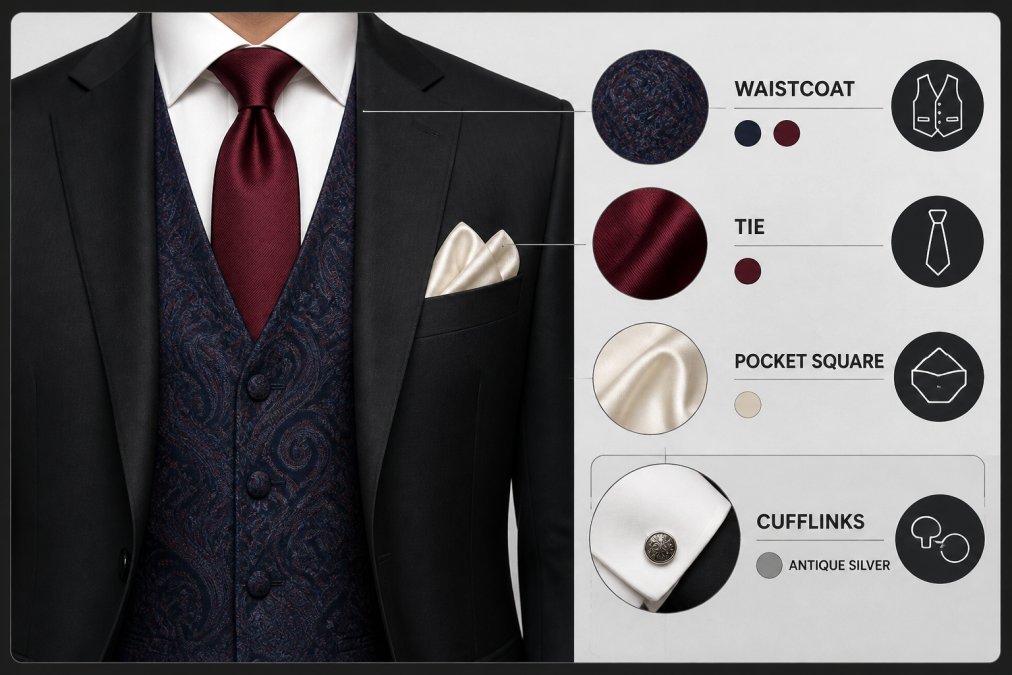
The pocket square adds a secondary layer of coordination. It can match the tie, match the waistcoat, or introduce a third complementary colour. A burgundy waistcoat with a burgundy tie and a cream pocket square creates a sophisticated three-colour story. For formal events, silk pocket squares read more elevated than cotton.
Hardware and Cufflink Matching
Cufflinks and waistcoat buttons create a visual system of hardware throughout your outfit. Ideally, these should coordinate without matching exactly. Silver cufflinks with silver waistcoat buttons create coherence; mixing metals reads as unintentional rather than intentional contrast.
The material of your cufflinks should echo the material of your waistcoat or tie. If your waistcoat features silk with a subtle sheen, silver or mother-of-pearl cufflinks complement that material language. This small detail separates a carefully considered look from an assembled-last-minute appearance.
Waistcoat and Tie Colour Combinations That Work
Certain colour pairings have proven their staying power across decades of formal dressing because the colours have compatible undertones and similar visual weight.
Classic Pairings for Formal Events
Navy waistcoat with burgundy tie is perhaps the most reliable combination across all formal contexts. The navy provides a neutral base; the burgundy adds warmth and visual interest. This pairing works on warm and cool skin tones alike, across different lighting conditions, and in both traditional and contemporary settings.
Charcoal waistcoat with deep purple tie creates subtle sophistication. Burgundy waistcoat with navy tie reverses the first pairing and creates more visual drama, working best for men with warm skin tones. Cream or champagne waistcoat with navy or charcoal tie is the choice for men who prefer a lighter, more contemporary aesthetic.
These pairings work because each colour has sufficient visual weight to stand on its own, yet they share compatible undertones that create harmony rather than clash.
Contemporary Combinations for Weddings
Modern weddings increasingly embrace colour beyond traditional black-tie monotony. A forest green waistcoat with a cream tie and gold cufflinks reads contemporary without sacrificing formality. A blush or dusty rose waistcoat with a burgundy tie and silver accessories works for men with warm skin tones. A teal or peacock-blue waistcoat with a cream or silver-grey tie represents the current edge of formal wear.
If both colours appear in nature together (forest green with cream, dusty rose with burgundy), they'll work together in formal wear.
Formal Waistcoat Etiquette and Styling Rules
Formal dress codes exist to create visual consistency and signal respect for the occasion.
Dos and Don'ts of Waistcoat Wear
Do wear a waistcoat that fits your torso precisely. The buttons should sit at your natural waistline without pulling or sagging. Do ensure your shirt shows approximately half an inch at the cuff when your arms are at your sides. Do button your waistcoat completely when standing; unbutton the bottom button when sitting.
Don't wear a waistcoat with a casual suit or sports jacket. Don't choose a waistcoat colour that matches your suit jacket exactly, an identical match reads as an accident. Either contrast intentionally or coordinate subtly. Don't forget about the back of your waistcoat; the back matters, especially at events where you'll remove your jacket. Don't wear a patterned waistcoat with a patterned tie, patterned shirt, and patterned pocket square. One statement piece and solid accessories is the formula that works.

Seasonal Colour Choices
Summer formal wear calls for lighter colours and breathable fabrics. A cream waistcoat, pale grey waistcoat, or light champagne waistcoat in linen or linen-blend fabric feels appropriate for warm-weather events. Winter formal wear embraces deeper, richer colours: burgundy, forest green, or charcoal in wool or wool-blend fabric.
Lighter fabrics (linen, cotton blends, thin wool) look better in lighter colours. Heavier fabrics (thick wool, velvet) look better in deeper colours.
Choosing the Right Fit and Fabric for Colour Impact
The same colour reads completely differently depending on the fabric and fit.
How Texture Affects Colour Perception
Silk and silk-blend fabrics have natural sheen that makes colours appear more vibrant and luminous. A burgundy waistcoat in silk catches light and appears richer. Silk waistcoats read as more formal and contemporary.
Wool fabrics absorb light and create depth. A burgundy waistcoat in wool appears more grounded and traditional. Wool waistcoats feel more classic and work across more formal contexts.
Jacquard and patterned fabrics create visual texture that affects colour perception. Velvet fabrics create rich, luxurious colour depth and are appropriate for black-tie events and upscale weddings.
If you're unsure about a colour choice, choose a heavier matte fabric. If you're confident about a colour choice, silk or jacquard fabrics allow you to showcase that choice more dramatically.
Bespoke and Tailoring Considerations
Custom tailoring allows you to control fit with precision. A waistcoat that fits perfectly skims your torso without clinging or billowing, allowing the colour to read clearly. Proper tailoring also ensures the waistcoat length is proportional to your height.
SimonVon Shop offers complete vest sets with coordinated ties, pocket squares, and cufflinks, eliminating the guesswork of accessory matching. The Blue Paisley Waistcoat and Bowtie Pocket Square Cufflink Vest Set (MJ-0120) at $92.00 demonstrates how a cohesive colour story works, the paisley pattern introduces multiple colours that coordinate through shared undertones, while the matching bowtie and cufflinks create visual continuity. The Purple Paisley Waistcoat and Necktie Pocket Square Cufflink Vest Set (MJ-0016) at $92.00 offers sophisticated depth for men with cool skin tones.
Sustainable and Vintage Waistcoat Sourcing
Vintage and pre-owned waistcoats offer colour options and quality construction that new pieces sometimes lack. A vintage burgundy waistcoat in genuine wool or silk often has richer colour saturation than contemporary reproductions because the dyes have aged into deeper tones.
Sourcing vintage pieces requires understanding quality markers: hand-stitching rather than machine-stitching, natural fibres rather than synthetics, and construction details that indicate the garment was made to last. Sustainable sourcing also means choosing pieces you'll wear repeatedly rather than purchasing trend-based colours you'll abandon after one season. A classic navy waistcoat in quality fabric is sustainable because it remains appropriate across multiple decades.
Matching waistcoat colours successfully requires understanding colour theory, considering your skin tone, and coordinating intentionally with your suit jacket and accessories. The difference between a carefully styled formal look and an assembled-last-minute appearance often comes down to whether these colour relationships are intentional or accidental.
SimonVon Shop's curated collection of waistcoats, ties, pocket squares, and cufflinks removes the complexity by providing coordinated sets designed by professionals who understand colour theory and formal styling. Whether you're dressing for a wedding, school ball, or formal business event, complete vest sets ensure your colour choices work together seamlessly. Explore the collection today and discover how the right colour coordination elevates your entire formal appearance.
Frequently Asked Questions
Should a waistcoat be the same colour as the suit jacket or different?
Both approaches work, depending on your desired effect. Matching colours create a streamlined, traditional formal look ideal for business and conservative events. Contrasting colours add visual interest and personality, perfect for weddings and celebrations. A navy suit with a burgundy or emerald waistcoat creates sophisticated contrast, while matching tones suit black-tie galas and formal dinners. Consider the event formality and your personal style when deciding.
How do I coordinate waistcoat and tie colour combinations for formal events?
Start with your waistcoat as the anchor. If it features a bold pattern like paisley, choose a tie in a complementary solid colour or subtle texture from the waistcoat's palette. For solid waistcoats, your tie can either match the tone (monochromatic) or provide contrast. A purple paisley waistcoat pairs beautifully with a deep plum or charcoal tie. Always ensure your pocket square echoes either the waistcoat or tie to create visual harmony across your formal accessories.
What are the key etiquette rules for wearing a waistcoat in formal settings?
Waistcoats should coordinate with your suit jacket and trousers rather than clash. Buttons should remain fastened beneath the jacket, with only the lowest button left undone for comfort. Your waistcoat should never extend beyond your jacket hem. For black-tie events, stick to neutral tones or subtle patterns. Business casual allows more colour experimentation. Always ensure your waistcoat fits properly through the shoulders and chest, as poor fit undermines even the best colour choices.
Can I mix and match different waistcoat colours with formal trousers?
Yes, mixing waistcoat colours with trousers is acceptable when done thoughtfully. Ensure your waistcoat coordinates with your suit jacket or dress shirt rather than clashing with your trousers. A burgundy waistcoat works well with charcoal trousers and a grey jacket. Avoid pairing bright or warm-toned waistcoats with cool-toned trousers. The key is creating visual cohesion across your entire outfit through colour harmony and complementary tones.
This article was written using GrandRanker