
How to Spot Quality Formal Fabric

Table of Contents
- Understanding Thread Count and Weave Density
- Fibre Content and Material Types for Formal Wear
- Assessing Fabric Weight, Drape and Hand Feel
- Detecting Sizing Agents and Surface Finish Tricks
- Big and Tall Menswear Options: Ensuring Quality Across Sizes
- How to Care for High-Quality Suit Fabric
- The Fabric Label: Your First Quality Checkpoint
- Conclusion
Last Updated: August 17, 2026
Understanding Thread Count and Weave Density
Thread count measures the number of threads woven into one square inch of fabric. For formal wear, understanding this metric matters because it directly affects durability, comfort, and how the fabric will age. A quality formal fabric typically features a thread count between 120 and 200 threads per square inch, though higher counts aren't always better, what matters is how those threads are constructed and finished.
Weave density works alongside thread count. Even with identical thread counts, two fabrics can feel completely different depending on how tightly the threads are woven together. A dense weave creates a smoother surface, resists pilling better, and maintains its shape longer through wear and cleaning. When you run your hand across the fabric, a quality weave feels substantial and structured, not loose or flimsy.
The best way to assess weave density is tactile. Hold the fabric up to light and look for gaps between threads. A quality formal fabric should show minimal light passing through. Run your fingers across both sides, the surface should feel even and smooth, without bumps or irregularities that suggest inconsistent weaving. If you can see individual threads clearly or feel rough spots, the weave density is likely too low for formal wear that needs to last.
Fibre Content and Material Types for Formal Wear
The fibres used in formal fabric determine how it breathes, drapes, and responds to wear. Natural fibres like wool, cotton, and silk have been the standard for formal menswear for good reason, they age gracefully and develop character over time. Synthetic blends add durability and reduce wrinkling, but poorly chosen synthetics can make fabric feel plastic and uncomfortable.
For formal suits and waistcoats, wool remains the gold standard. A quality wool formal fabric contains at least 80 percent wool, often blended with small amounts of synthetic fibre for stability. Pure wool can wrinkle slightly, but it breathes beautifully and develops a subtle sheen that signals quality. When you feel wool fabric, it should have a soft, almost buttery hand feel, not scratchy or harsh.
Silk adds elegance to formal waistcoats, pocket squares, and neckties. Silk fibres are naturally lustrous and drape with a fluid movement that synthetic alternatives struggle to match. When examining silk, look for a consistent sheen across the entire surface. Dull patches or uneven colouring often indicate lower-grade silk or poor finishing. High-quality silk should feel cool to the touch and smooth without being slippery.

Cotton in formal wear works best in dress shirts rather than suit jackets. Quality formal cotton should be long-staple cotton, the longer the individual fibre, the stronger and smoother the resulting fabric. Egyptian or Pima cotton represents the upper tier, with fibres that create a softer, more durable cloth. Run the fabric between your fingers; long-staple cotton feels almost silky, whereas short-staple cotton feels coarser.
Synthetic blends serve a practical purpose. A 15 percent polyester addition to wool improves wrinkle recovery without compromising breathability. However, blends above 30 percent synthetic often feel noticeably different, less breathable, more prone to clinging to skin, and less likely to develop the subtle patina that formal wear should acquire over years of use.
Assessing Fabric Weight, Drape and Hand Feel
Fabric weight determines how formal wear will hang on your body and how it will perform in different seasons. Weight is measured in grams per square metre (gsm). For formal suiting, quality fabrics typically range from 250 to 350 gsm. Lighter weights (around 250 gsm) work for summer formal wear or tropical climates. Heavier weights (300+ gsm) provide the structured, substantial feel that formal occasions demand.
The hand feel, how the fabric feels when you touch it, reveals more about quality than any label specification. A quality formal fabric should feel smooth and cool against skin, not rough or waxy. Run the fabric between your thumb and forefinger in both directions. If it feels noticeably different depending on direction, that's normal, but the difference should be subtle. A rough feel in one direction suggests inconsistent finishing or lower-grade fibres.
Drape describes how fabric falls and moves on the body. Quality formal fabric drapes with intention, it hangs smoothly without clinging or billowing. Pick up a swatch and let it hang from your hand. Watch how it moves. Does it fall in clean, controlled folds? That's excellent drape. Does it bunch up or cling to your hand? That suggests lower fibre quality or poor finishing.
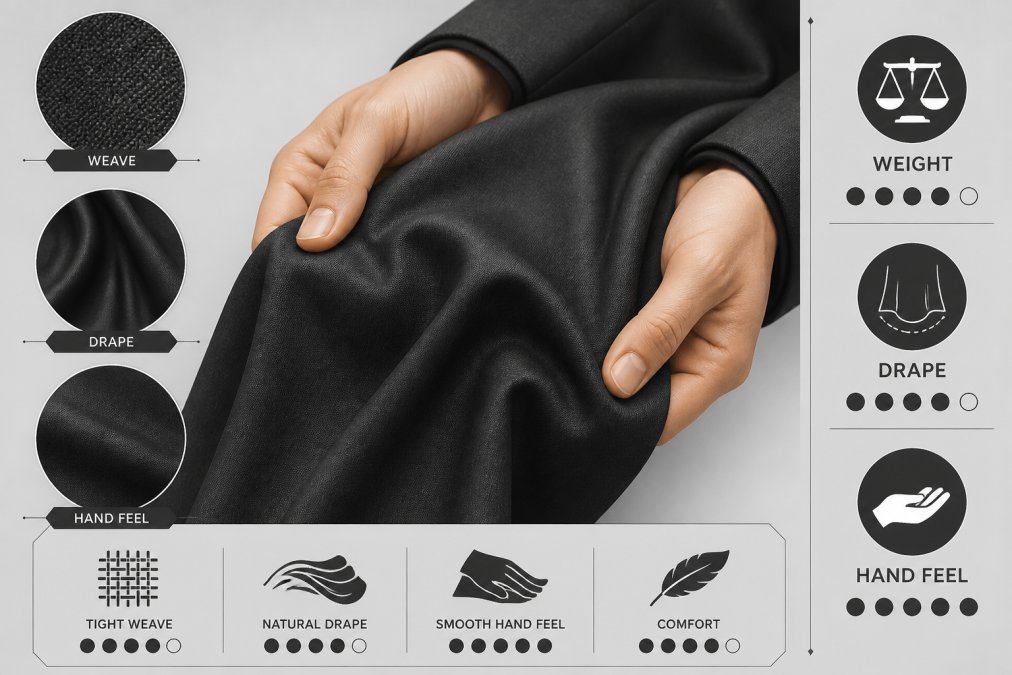
The flexibility test matters too. Fold the fabric gently and hold it folded for a few seconds, then release. Quality fabric should return to its original shape quickly without creasing permanently. Fabric that holds creases or develops permanent wrinkles suggests weak fibres or poor finishing. This test predicts how the garment will look after wearing and cleaning, a critical consideration for formal wear that needs to maintain its appearance.
Detecting Sizing Agents and Surface Finish Tricks
Manufacturers sometimes apply chemical treatments called sizing agents to make cheap fabric feel more substantial temporarily. These agents wash out after a few cleanings, leaving the fabric limp and disappointing. Learning to detect sizing is essential for spotting quality fabric before purchase.
Sizing agents create an artificial stiffness and sheen. When you feel fabric treated with sizing, it feels crisp and almost papery. The surface has an unnatural shine that looks plastic rather than lustrous. Run your fingernail gently across the fabric, if it leaves a visible mark that doesn't immediately disappear, sizing is likely present. Quality formal fabric resists this test; the fibres spring back immediately.
The water test reveals sizing. Dampen a small corner of the fabric with water and rub it gently. If the fabric softens noticeably and loses its sheen, sizing was doing most of the work. Quality formal fabric maintains its hand feel and appearance even when wet. This test works because sizing agents dissolve or weaken in water, whereas natural fibre structure remains stable.
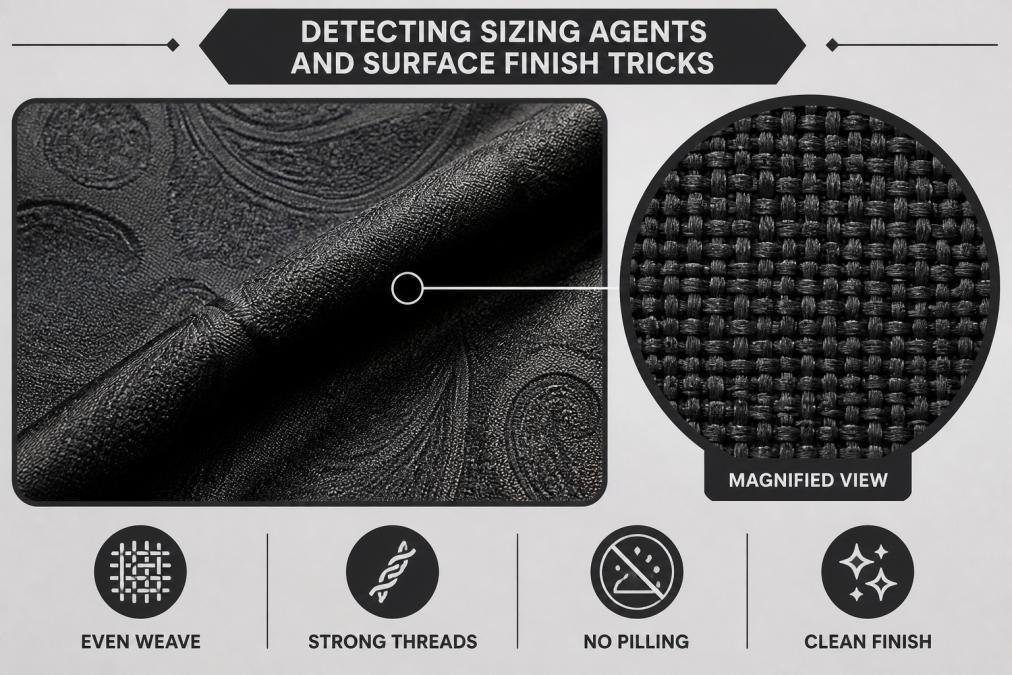
Mercerised cotton represents legitimate finishing rather than deceptive sizing. Mercerisation is a chemical process that strengthens cotton fibres and gives them a subtle sheen. Unlike sizing, mercerisation is permanent, it doesn't wash out. Mercerised cotton feels smoother and more lustrous than untreated cotton, and that quality persists. The difference is durability: mercerised cotton actually becomes stronger, whereas sized fabric becomes weaker.
Surface finish quality also matters. Run your hand across the fabric in all directions. A quality finish feels consistent. Rough patches, pilling, or uneven texture suggest poor finishing or low-grade fibres. Check seams and hems if the garment is already constructed, loose threads or uneven stitching indicate rushed manufacturing.
Big and Tall Menswear Options: Ensuring Quality Across Sizes
Finding quality formal fabric in larger sizes requires the same assessment skills, but with additional considerations. Fabric quality shouldn't vary based on garment size, a quality suit in size 2XL should use the same calibre of material as a size M. Unfortunately, some manufacturers cut corners on larger sizes, using thinner fabric or lower thread counts to reduce costs.
When examining larger-size formal wear, pay particular attention to seam integrity. Larger garments experience more stress on seams, so quality construction becomes even more critical. Check that seams are reinforced, stitching is tight and even, and thread colour matches the fabric. A quality garment maintains consistent seam spacing and doesn't show puckering or tension issues.
The drape test becomes more important in larger sizes. Fabric that drapes beautifully in a smaller size must drape equally well when scaled up. If you're ordering online, request detailed photos of how the fabric hangs on the body. Quality formal wear should create clean lines and smooth folds regardless of size.
Button and fastening quality often indicates overall construction standards. Check that buttons are securely attached with multiple threads, not just two weak anchor points. For waistcoats and vests, ensure the back strap adjustment mechanism is sturdy and won't fail after repeated use. These small details reveal whether the manufacturer invested in quality throughout the garment.
How to Care for High-Quality Suit Fabric
Proper care preserves the quality you've identified and assessed. High-quality formal fabric demands respect, careless cleaning can destroy what careful manufacturing created. The first rule is frequency: wear your formal pieces multiple times before cleaning. Most formal wear benefits from airing between wears rather than immediate cleaning.
When cleaning is necessary, use a professional dry cleaner experienced with formal menswear. Not all dry cleaners are equal; ask specifically whether they specialise in formal wear and whether they use traditional solvent cleaning rather than newer methods that can damage delicate fabrics. Quality fabric deserves quality care.
At home, store formal wear properly. Use wooden hangers that support the shoulders without creating stress points. Ensure adequate ventilation in your wardrobe, humidity and stagnant air degrade fabric over time. Cedar blocks or sachets help prevent moth damage without the harshness of naphthalene. Fold waistcoats and vests carefully along natural seams, using acid-free tissue paper to prevent creasing.
Spot cleaning minor stains immediately prevents them from setting. Use a soft brush to remove dust and debris gently. For liquid spills, blot rather than rub, rubbing works the stain deeper into the fabric. A damp cloth with cool water often removes fresh stains without requiring full cleaning.
The Fabric Label: Your First Quality Checkpoint
The label tells you more than you might expect. Quality manufacturers provide detailed fibre content information, not just "wool blend" but specific percentages. A label stating "85% wool, 15% polyester" shows transparency and confidence in the product. Vague labels like "wool rich" or "contains wool" suggest the manufacturer is hiding lower percentages.
Care instructions reveal expected durability. If the label recommends dry cleaning only and warns against water exposure, the fabric likely contains delicate fibres or finishes that won't withstand normal wear. Quality formal fabric should tolerate professional dry cleaning without special warnings or restrictions.
Country of origin matters less than manufacturing standards, but it provides context. Fabrics from established textile regions like Italy, England, or Japan often reflect generations of refinement. That said, quality fabric comes from many countries, what matters is whether the manufacturer has invested in proper equipment and quality control.
The brand's reputation on the label carries weight. Established fabric mills have reputations to protect and standards to maintain. Lesser-known labels might offer value, but they carry more risk. When you see a recognised fabric mill name on a label, you're getting decades of expertise.
SimonVon Shop sources formal fabrics from manufacturers committed to transparent labelling and consistent quality. Our waistcoats and vest sets feature high-grade silk with documented thread specifications and fibre percentages, so you know exactly what you're purchasing before it arrives.
Conclusion
Spotting quality formal fabric requires understanding thread count and weave density, recognising natural versus synthetic fibres, assessing weight and drape through tactile examination, detecting sizing tricks, and reading labels carefully. These skills protect you from expensive mistakes and ensure your formal wear investment delivers years of elegant service.
Quality formal fabric makes a tangible difference in how you present yourself at weddings, galas, and professional occasions. Rather than guessing at quality, use the assessment techniques covered here to examine fabric directly and make confident purchasing decisions. SimonVon Shop's collection of formal waistcoats, vest sets, and accessories features carefully selected fabrics that meet these quality standards, with transparent labelling and proven durability. Shop Now and discover formal wear that combines premium quality with genuine value.

Frequently Asked Questions
How can you tell if a suit fabric is high quality?
Quality formal fabric shows several telltale signs: thread count above 120, tight weave density that feels dense to the touch, natural fibre content (wool, silk, linen) or high-quality synthetic blends, minimal pilling after rubbing, and clear seam integrity with tight stitching. Check the fabric label for fibre composition and weight measured in grams per square metre. Run your hand across the surface, premium fabric has a smooth hand feel without visible loose threads or sizing residue.
What is the best fabric for formal suits?
Wool remains the gold standard for formal suits, particularly 100% pure new wool or wool blends with 20-30% synthetic fibres for durability. Merino wool offers superior breathability and softness. For summer formal wear, lightweight wool blends or linen-wool combinations provide comfort without sacrificing elegance. Silk adds lustre to waistcoats and accessories. Avoid 100% synthetic fabrics in formal settings, they lack the natural drape, breathability, and prestige of wool-based materials. Quality formal fabric should have a minimum weight of 250 gsm for jackets.
How does fabric weight affect the quality of a formal suit?
Fabric weight, measured in grams per square metre, directly influences durability, drape, and longevity. Formal suit jackets typically range from 280-320 gsm for year-round wear, with lighter options around 250 gsm for summer and heavier 350+ gsm for winter. Heavier fabrics resist wrinkles better, hold their shape longer, and develop character with age. Lighter fabrics offer better breathability but require more careful handling. Premium formal fabric maintains consistent weight throughout, indicating quality manufacturing. Cheap fabrics often feel thin and flimsy, typically under 200 gsm, and lose shape quickly with wear.
How do you check for fabric durability in formal clothing?
Test durability by gently rubbing the fabric surface for 10-15 seconds, quality fabric resists pilling and shows no loose fibres. Examine seams closely; they should be straight, tight, and reinforced at stress points like shoulders and armpits. Check the warp and weft structure under good light; tight, even weaving indicates durability. Assess colorfastness by examining whether the dye appears even and vibrant, not faded or patchy. Look for manufacturing transparency on the label, reputable brands list fibre content, origin, and care instructions clearly. High-quality formal fabric maintains its appearance and structural integrity after multiple wearings and proper cleaning.
This article was written using GrandRanker