
Slim Fit vs Regular Fit Dress Shirts: Key Differences

Table of Contents
- Slim Fit vs Regular Fit Dress Shirts: Core Differences
- What Slim Fit Means
- What Regular Fit Means
- Fit Through the Chest, Waist, and Sleeves
- How Should a Dress Shirt Fit
- How to Measure for a Dress Shirt
- Slim Fit vs Tailored Fit Shirts: What Sets Them Apart
- Shirt Fit for Broad Shoulders
- Frequently Asked Questions
Last Updated: October 19, 2026
Slim Fit vs Regular Fit Dress Shirts: Core Differences
The difference between slim fit vs regular fit dress shirts shapes how you look, how comfortable you feel, and whether the shirt suits your body type and occasion. At SimonVon Shop, we've helped hundreds of customers find the right fit, and the most common mistake is grabbing a familiar size without understanding how the cuts differ.
The core distinction is straightforward: a slim fit dress shirt is tailored closer to your body with a pronounced taper through the torso, while a regular fit offers more room through the chest, waist, and arms. But that simple difference cascades into choices about silhouette, comfort, layering ability, and whether the shirt flatters your frame or fights against it.
This guide breaks down what separates these two cuts, how to measure yourself, and which one works best for your build and situation.
What Slim Fit Means
A slim fit dress shirt follows the natural contours of a leaner frame, tapering noticeably from chest to waist with sleeves that sit closer to your arms without being restrictive. This cut creates a sharp, modern appearance for professional settings, formal events, and anyone who prefers a tailored look.
Slim fit shirts feature a narrower chest, pronounced waist taper, and shorter sleeves than regular counterparts, sitting close without clinging to create clean lines under a blazer. This silhouette has become the default for contemporary menswear because it photographs well and suits most body types.
The trade-off is that slim fit requires accurate sizing. Too large and you lose the tailored effect. Too small and you'll feel restricted or the buttons will pull across the chest.
Our Classical Men's spring and autumn slim printed fashion long sleeved shirts at $44.85 demonstrate this cut perfectly; the slim silhouette gives a modern, polished look while the breathable fabric keeps you comfortable through the day.

What Regular Fit Means
A regular fit dress shirt offers more room throughout the body: a fuller chest, gentler waist taper, and more sleeve fabric for arm mobility. It prioritises comfort and ease of movement, making it ideal for layering, all-day wear, and body types that don't match the slim template.
Regular fit works well for broader shoulders, larger builds, or anyone who finds slim cuts restrictive. You can move freely, layer under a vest or jumper without pulling, and wear it untucked without looking sloppy.
The downside is that regular fit can look baggy if you're significantly smaller than the size chart suggests, or if the shirt isn't tailored. A well-fitted regular shirt on the right body type looks professional and comfortable. A poorly sized one looks shapeless. Our Dark Blue High-Quality Business and Casual shirt in Cotton Long sleeve at $44.85 gives you that roomy, versatile fit without sacrificing quality.

Fit Through the Chest, Waist, and Sleeves
Understanding how slim fit vs regular fit dress shirts differ in the chest, waist, and sleeves determines whether a shirt flatters you or works against your frame.
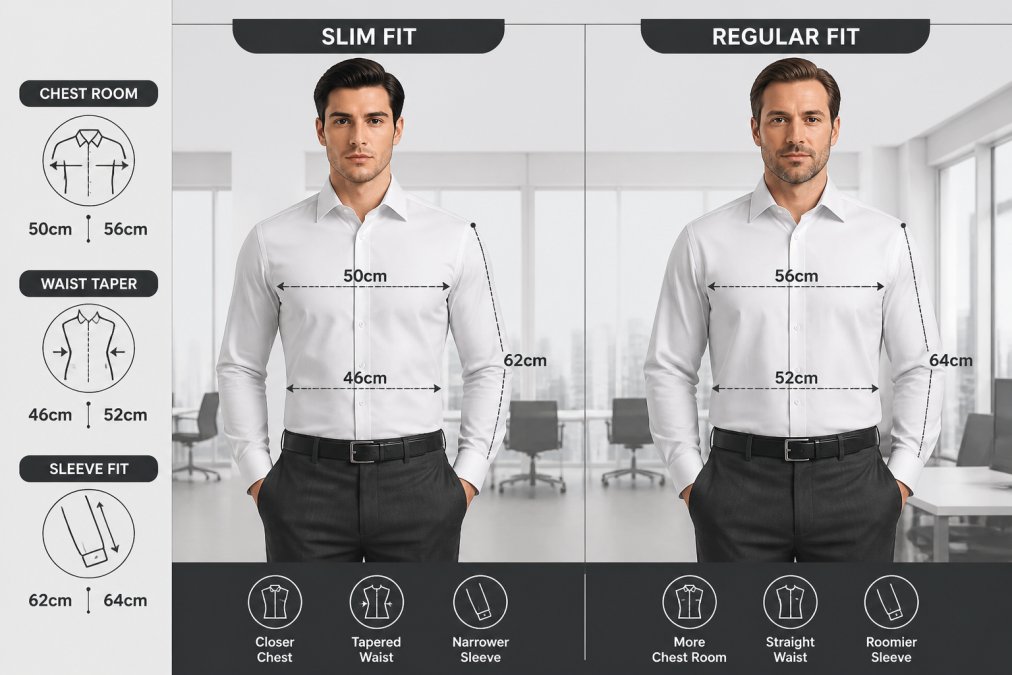
Chest room and shoulder fit
Slim fit chests are cut approximately 2.5 to 3.8 centimetres narrower than regular fit at the same size, creating the tailored silhouette but demanding accurate sizing. If your shoulders are broad or chest full, a too-tight slim fit will pull at the buttons and restrict arm movement.
Regular fit provides approximately 2.5 to 5 centimetres more chest room, so the shirt sits comfortably between sizes and accommodates layering. For athletic or broad shoulders, it often feels less constraining without looking oversized.
The shoulder seam is the true measure here. It should sit right at the edge of your shoulder bone, not riding up your neck or slipping down your arm. In slim fit, this seam runs narrower. In regular fit, it's positioned further out to accommodate a wider frame.
Waist taper and silhouette
Slim fit tapers sharply from chest to waist, creating a defined silhouette even without a jacket, tucked or untucked.
Regular fit has a gentler taper or almost none, maintaining roughly the same width from chest to hem. It drapes more loosely, which works well for layering or non-tapering body shapes, and looks equally good tucked or untucked.
The waist taper is where body shape matters most. If you have a naturally tapered frame, slim fit will look sharp. If your build is more rectangular or athletic, regular fit prevents the shirt from clinging uncomfortably.
Sleeve and arm mobility
Slim fit sleeves sit closer to your arm without bunching, creating clean lines under suit jackets. The reduced fabric leaves less room for layering, so a thermal or base layer can create bulk.
Regular fit sleeves have more fabric, giving better mobility and room for layering without pulling when you reach, write, or gesture. The trade-off is they can look slightly loose on smaller frames, requiring careful sizing or tailoring.
When you raise your arm, the sleeve should move with you: slim fit works closer to the skin, while regular fit gives more give, which most people find more comfortable.
How Should a Dress Shirt Fit
The ideal fit for any dress shirt, slim or regular, should feel comfortable enough that you forget you're wearing it, yet tailored enough to look intentional and professional.
Start with the shoulders: the seam should sit exactly where your shoulder ends. If it rides up your neck, the shirt is too small; if it slips down your arm, it's too large.
Button the shirt and check the chest: you should fit a single finger between fabric and body at the buttons. More than one means too loose; none means too tight. This applies to both fits.
At the waist, the shirt should follow your natural contours without clinging: slim fit shows definition, while regular fit drapes more loosely without looking like a tent.
Sleeve length should end at your wrist bone with your arm relaxed; when you bend or reach, roughly half an inch of cuff should show below your jacket sleeve.
Classical Men's spring and autumn slim printed fashion long sleeved shirts →
Finally, when you sit and move, the shirt shouldn't pull at the buttons, ride up your back, or restrict your arm movement.
How to Measure for a Dress Shirt
Getting your measurements right is the most reliable way to find a shirt that fits. Most sizing issues come from guessing, so take five minutes now.
You'll need a soft measuring tape and a mirror. Wear a t-shirt, not a heavy jumper, for accuracy.
Neck: Measure around the base of your neck where a collar sits. The tape should be snug but not tight. You should fit one finger under the tape.
Chest: Measure around the fullest part of your chest, roughly at nipple height. Keep the tape parallel to the ground and snug but not compressed.
Waist: Measure around your natural waist, roughly where your belly button sits. This helps predict how the shirt will taper.
Sleeve length: Have someone help you here. Extend your arm straight out to the side, slightly bent at the elbow.
Once you have these four measurements, compare them against the size chart for the specific shirt you're considering.
If you're between sizes, choose based on your chest measurement for slim fit (tighter is better) and your waist measurement for regular fit (roomier is better).
Slim Fit vs Tailored Fit Shirts: What Sets Them Apart
"Tailored fit" often appears alongside slim and regular fit. It's not quite the same as slim fit, though many people use the terms interchangeably.
Tailored fit is a middle ground: more taper than regular but less aggressive than slim, a chest closer than regular but not as narrow as slim, and sleeves with more room than slim but less than regular.
Tailored fit suits men who find slim fit restrictive but want more definition than regular fit, and is popular in business settings where you want polish without the athletic slim silhouette.
The practical difference comes down to body type and comfort: athletic or lean frames suit slim fit, broader builds suit regular fit, and those in between may prefer tailored fit. Most formal occasions accept any of these three cuts. The choice is about what makes you feel confident and comfortable. At SimonVon Shop, we stock options across this spectrum so you can find what works for your frame.
Shirt Fit for Broad Shoulders
Broad shoulders face a specific challenge: slim fit often feels too tight across the chest and shoulders, while regular fit can look baggy through the torso.
If you have broad shoulders, start by checking the chest measurement on the size chart. Choose the size that matches your chest, even if the waist feels roomy.
Once you have a shirt that fits your shoulders and chest, you have options. You can wear it as-is if the extra room at the waist doesn't bother you.
Regular fit is often the better starting point for broad shoulders because the chest room is already built in. You're less likely to feel restricted, and if the waist is too loose, tailoring is a straightforward fix.
Our New Light Blue Solid Stretch Men's Long Sleeve Shirt and New Blue Solid Stretch Men's Long Sleeve Shirt at $97.75 each come in regular fit with anti-shrink and breathable fabric, making them reliable choices for broader builds.

At SimonVon Shop, we're committed to helping you find premium-quality formal wear that fits your frame and your budget. Whether you need slim printed shirts for a modern look or regular fit options with premium fabrics, we stock both cuts at prices that won't stretch your wallet.
| Fit Type | Chest Room | Waist Taper | Sleeve Fit | Best For | Comfort Level |
|---|---|---|---|---|---|
| Slim Fit | Narrow | Sharp taper | Close to arm | Lean frames, modern look | Tailored feel |
| Regular Fit | Generous | Gentle taper | More room | Broader shoulders, layering | Relaxed feel |
| Tailored Fit | Moderate | Moderate taper | Medium room | Compromise between both | Balanced |
Shop our collection of high-quality dress shirts at SimonVon Shop and find your perfect fit today. We offer both slim and regular cuts, premium fabrics, and prices that make looking sharp affordable for every occasion.
Frequently Asked Questions
What is the main difference between slim fit and regular fit dress shirts?
Slim fit shirts have a narrower cut through the chest, waist, and sleeves, creating a simplified silhouette that follows your body contours. Regular fit shirts offer more room throughout, with a straighter cut and less taper at the waist. Slim fit works well for athletic or slender builds, while regular fit suits broader frames or those who prefer ease of movement and comfort.
How should a dress shirt fit properly?
A well-fitting dress shirt should have the collar sitting snugly against your neck with room for one finger, shoulders seams aligned with your shoulder points, and the button line centred on your chest. The shirt should taper slightly at the waist without pulling or bunching. Sleeves should reach your wrist bone when arms are relaxed. Whether slim or regular fit, comfort and proper proportions matter more than the label.
Can you wear a slim fit shirt if you have broad shoulders?
Slim fit shirts can work for broad shoulders if you choose the right size and prioritise shoulder fit first. The shoulder seam must align with your natural shoulder point, even if the rest of the shirt feels snug. You may need to size up in slim fit to accommodate shoulder width, then have the waist and sleeves tailored. Alternatively, regular fit or tailored fit options may offer better comfort without alteration.
How do I measure for a dress shirt to ensure the right fit?
Measure your neck circumference by wrapping a soft tape measure around the base of your neck, keeping one finger's space for comfort. Measure your sleeve length from the centre back neck, across the shoulder, down the arm to your wrist bone with your arm at a 90-degree angle. For chest and waist, measure around the fullest part of each area while wearing a fitted shirt. Use these measurements with a size chart to find your fit, whether slim or regular.
What is the difference between slim fit and tailored fit shirts?
Slim fit is a standard cut with reduced room throughout, designed off-the-rack for leaner builds. Tailored fit sits between slim and regular, offering a modern, fitted silhouette with slightly more room than slim fit but more shaping than regular fit. Tailored fit is ideal for athletic or average builds seeking a sharp appearance without excessive tightness. Both are more shaped than classic regular fit, but tailored fit typically offers more versatility across body types.