Which Suit Style Is Trending Now? A 2026 Guide

Table of Contents
- The Suit Styles Trending in 2026: A Quick Comparison
- Relaxed Tailoring and Soft Construction: The Defining Trend
- Double-Breasted vs Single-Breasted: Which Cut Is Leading
- A Modern Suit Fit Guide: Trouser Break, Drape and Silhouette
- How to Style a Waistcoat for Weddings, Balls and Galas
- Formal Wear Dress Code Explained: From Business Casual to Black Tie
- Essential Colours, Sustainable Fabrics and Body-Type Advice
- Conclusion: Building a Suit Wardrobe That Lasts
- Frequently Asked Questions
Last Updated: September 15, 2026
The Suit Styles Trending in 2026: A Quick Comparison
The suit style trending now is relaxed tailoring with soft construction, reshaping everything from shoulder lines to trouser drape. This guide from SimonVon Shop breaks down the season's cuts, lapels and fits.
| Style | Defining Feature | Best For | Formality |
|---|---|---|---|
| Relaxed single-breasted | Soft shoulder, unstructured jacket | Business casual, weddings | Semi-formal |
| Double-breasted | Overlapping front, peak lapels | Galas, black tie events | Formal |
| Three-piece | Matching waistcoat added | Weddings, balls | Semi-formal to formal |
| Wide-leg trouser cut | Looser drape, minimal break | Everyday tailoring | Flexible |
The shift toward softer construction is the clearest change in years, and it suits many body types. For guidance on how jackets should sit across the shoulder, Savile Row Bespoke Association on jacket construction is a useful reference point.
Relaxed Tailoring and Soft Construction: The Defining Trend
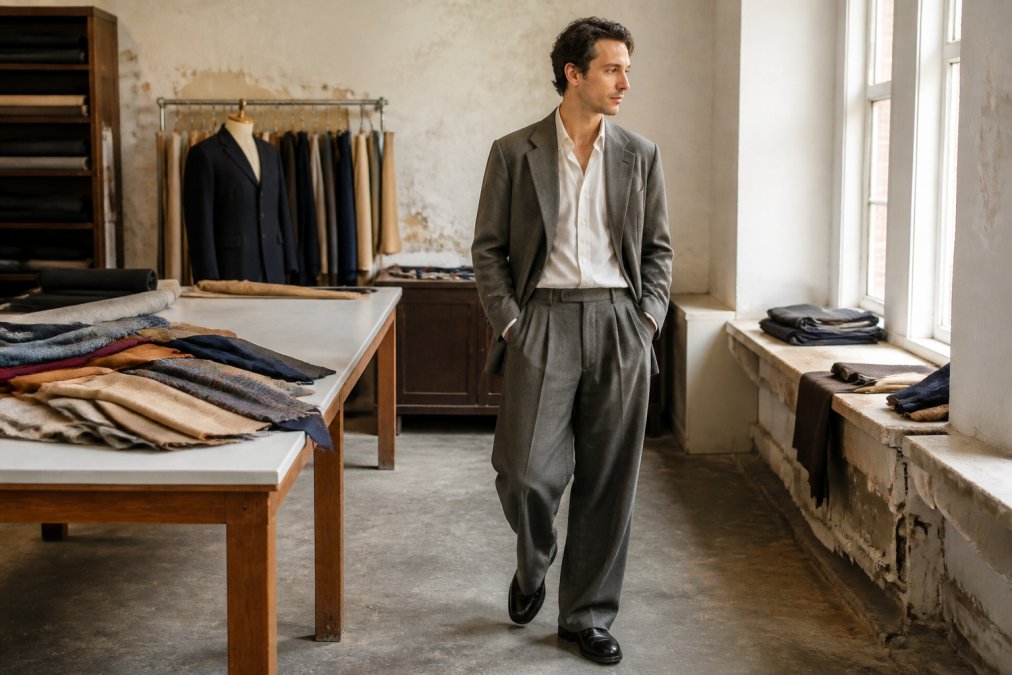
Relaxed tailoring removes stiff structure from the jacket, letting fabric follow the body's natural line. Soft construction means less shoulder padding, lighter canvas and a more forgiving drape.
Shoulder Padding, Canvas Construction and Vent Styles
Shoulder padding now sits light, sometimes barely there. Canvas construction is often half-canvassed rather than fully fused, helping the jacket mould to you over time. A single vent keeps movement easy for most builds; double vents suit a slimmer frame.
Double-Breasted vs Single-Breasted: Which Cut Is Leading
Single-breasted cuts still dominate everyday wear, but the double-breasted jacket has returned strongly for formal occasions. Single-breasted suits fasten with one row of buttons for a clean, versatile line; double-breasted styles cross one panel over the other, creating a broader, more commanding silhouette.
- Single-breasted: easier to wear open, more forgiving across the midsection, best for business and daytime events
- Double-breasted: stronger presence, best kept buttoned, ideal for evening formals and galas
For most wardrobes, start single-breasted and add a double-breasted piece once you have the basics covered.
Notch Lapel vs Peak Lapel: Choosing the Right Detail
A notch lapel has a step cut into its upper edge and suits almost every single-breasted jacket. A peak lapel points upward and outward, adding width across the chest, and pairs naturally with double-breasted cuts. Narrow shoulders suit peak lapels; broader frames suit notch lapels.
A Modern Suit Fit Guide: Trouser Break, Drape and Silhouette
The modern suit fit guide comes down to three measurements: trouser break, drape and silhouette. Get these right and a relaxed cut reads intentional rather than borrowed.
Trouser Break: The Four Types Worth Knowing
Trouser break is how much fabric folds where the hem meets the shoe. Four breaks are recognised, and current preference sits at the tighter end:
- Full break: one deep fold resting on the shoe. Traditional, but it shortens the leg line and looks dated against a wide-leg cut.
- Half break: a single soft crease touching the top of the shoe. The safest middle ground for business wear.
- Quarter break (slight break): the hem just grazes the shoe with a faint crease. This is where most current tailoring sits.
- No break: the hem ends cleanly above the shoe with no fold at all. Common with wide-leg and tapered cuts, and it keeps the line long.
A practical rule: the wider the leg opening, the less break you want. A wide-leg trouser with a full break pools fabric and reads sloppy; with no break it hangs cleanly. For a tapered or slim cut, a quarter break prevents clinging at the ankle.
Drape: How Fabric Falls From Shoulder to Hem
Drape describes how fabric falls from the shoulder and hip. Looser drape is in favour: wide-leg trousers and a jacket that skims rather than clings. It is governed by cloth weight, canvas in the jacket, and excess fabric through the chest and thigh.
A heavier cloth, mid-weight wool, for instance, drapes in clean vertical lines. A lighter cloth such as summer linen moves more but creases faster and clings in humidity. That is why unstructured jackets in lighter cloths look best in a slightly roomier cut: the fabric needs space to fall rather than grip.
Silhouette: Tapered Waist, Room Elsewhere
Silhouette ties it together. A tapered waist with room elsewhere reads sharper than an all-over slim cut and is more comfortable across a long day. Suppressing the waist creates a V-shaped line from shoulder to hip that flatters almost every build, while room through the chest, upper arm and thigh prevents the pulling that makes a slim cut look strained.
When you try a jacket, check three points:
- Shoulder seam: it should sit at the edge of your shoulder bone, not past it.
- Button stance: the fastening button should sit near your natural waist, not below it.
- Jacket length: the hem should cover your seat, roughly at the knuckle of your thumb when your arms hang.
For sizing conventions that vary between makers, ISO sizing standards for apparel offers a useful baseline, but always treat the tape measure as a starting point and the mirror as the final judge.
Matching the Cut to Your Build
The trending relaxed cut is a family of shapes, and the right one depends on your frame:
- Athletic or broad-shouldered: a soft shoulder with minimal padding prevents the jacket from adding width you already have. Choose a single-breasted jacket with a notch lapel and a single vent, and keep the trouser a straight or gently tapered cut rather than a true wide-leg, which can read boxy on a heavier upper body.
- Slim or narrow-framed: a lightly padded shoulder and a peak lapel add visual width across the chest. A double-breasted cut works well here for the same reason. On trousers, a wide-leg or pleated cut adds volume to the lower half and balances the frame.
- Tall: a double-breasted jacket and a slightly longer jacket hem fill the vertical line. A wider trouser with a quarter break keeps proportion in check; a no-break hem on a tall frame can look like the trousers are too short.
- Shorter: a single-breasted jacket with a higher button stance lengthens the leg line, and a shorter jacket hem (just covering the seat) keeps the torso from dominating. Avoid a deep full break, which visually shortens the leg further.
- Broader midsection: a single-breasted jacket worn open, or a double-breasted jacket kept buttoned, both work, but the key is a clean drape through the waist rather than a tight suppression.
How to Style a Waistcoat for Weddings, Balls and Galas
Formal Wear Dress Code Explained: From Business Casual to Black Tie
Essential Colours, Sustainable Fabrics and Body-Type Advice
The Colour Shortlist, Ranked by Versatility
Sustainable Fabrics: What the Labels Actually Mean
Caring for Trending Fabrics So They Outlast the Trend
Budget-Conscious Styling and Capsule Wardrobe Integration
Conclusion: Building a Suit Wardrobe That Lasts
Frequently Asked Questions
What style of suit is popular now?
Relaxed tailoring is the dominant suit style in 2026. Jackets are cut with softer shoulders and less structure, while trousers have moved away from skinny fits toward straight or wide-leg cuts. Double-breasted jackets have also returned in a big way, and earthy tones like olive and brown are replacing the all-navy wardrobe. The overall look is comfortable but still sharp, which suits weddings, school balls and corporate settings equally well.
Are slim-fit suits still in fashion?
Slim fit has not disappeared, but it is no longer the default. A slim-cut jacket still works well for leaner builds, especially in a modern suit fit guide where the shoulder seam sits cleanly and the trouser tapers gently rather than clinging. The key change is comfort: if you can pinch more than a few centimetres of fabric at the thigh, the cut is too tight for current trends. Many men now choose a tailored slim jacket with a slightly looser trouser.
How should a modern suit fit in 2026?
Focus on three points. The shoulder seam should end at the edge of your natural shoulder, with minimal padding. The jacket should close with one button fastened and no pulling across the chest. Trousers should sit at the waist with a slight break over the shoe, not a pool of fabric. Fabric weight matters too: a mid-weight wool drapes better than a stiff blend, which helps the silhouette look intentional rather than borrowed.
How do I style a waistcoat for a formal event?
Match the waistcoat to your jacket and trousers for a classic three-piece suit, or use a contrasting colour to stand out at a gala. Keep the bottom button undone, leave the jacket open when wearing it, and make sure the waistcoat covers your waistband. For a wedding or school ball, a burgundy or claret waistcoat with a dark suit and a simple tie creates a sharp look without overdoing it.
The challenge with any suit purchase is getting the fit right the first time, especially when you're ordering online. SimonVon Shop makes that easier with a curated range of suits, waistcoats and vest sets, plus the accessories that complete the look, all at prices that don't punish you for wanting quality. Browse the collection and find the cut that suits you.