Formal Suits for Business Professionals: 2026 Guide

Table of Contents
- What Makes a Professional Suit Suitable for Business Wear
- Business Professional Dress Code Requirements Explained
- Suit Fit Options: Tailored Fit, Slim Fit, and Skinny Fit for the Office
- How to Style a Suit for a Job Interview
- Essential Accessories for Business Suits
- Fabric Quality and Suit Durability for Daily Wear
- Affordable Formal Suit Collections at SimonVon Shop
- Suit Care and Maintenance for Longevity
Last Updated: August 21, 2026*
What Makes a Professional Suit Suitable for Business Wear
A professional suit depends on fit, fabric quality, and silhouette. The jacket should sit cleanly across your shoulders without bunching, trousers should break slightly at your shoe, and the overall silhouette should reflect current tailoring standards. Fabric composition matters significantly, a polyester-viscose blend offers durability for daily office wear whilst maintaining breathability.
The distinction between tailored fit, slim fit, and skinny fit fundamentally changes how the suit performs across different body types and professional contexts.

Business Professional Dress Code Requirements Explained
Business professional dress codes exist on a spectrum. Traditional corporate settings (banking, law, government) expect a full suit with dress shirt and tie daily. Business casual environments permit tailored trousers or chinos with a blazer. Smart casual allows dress trousers without a jacket, though a blazer elevates the look.
Navy, charcoal, and black remain the safest suit choices because they pair with the broadest range of dress shirts and accessories. According to professional dress code guidance from corporate HR resources, the safest approach is building your core wardrobe around neutral tones first, then adding personality through accessories.
Many professionals benefit from owning at least two suits: one in navy or charcoal for regular wear, and a second in a complementary colour for variety. This spreads wear across multiple garments, extending the lifespan of each.
| Dress Code Level | Suit Requirement | Typical Settings |
|---|---|---|
| Business Professional | Full suit daily | Corporate, law, finance, government |
| Business Casual | Blazer + trousers | Creative agencies, tech, consulting |
| Smart Casual | Dress trousers + optional blazer | Startups, retail management, hospitality |
Suit Fit Options: Tailored Fit, Slim Fit, and Skinny Fit for the Office
The three primary fit categories represent different approaches to how a suit sits on your body.
Tailored fit represents the traditional, slightly roomier approach. The jacket has a gentle taper through the torso without aggressive narrowing. This fit works best for men with broader shoulders, larger frames, or those who prefer movement and comfort. Tailored fit suits from SimonVon Shop, like the Navy Blue Men's Elegant 3pcs Suit, maintain professional structure whilst accommodating athletic or larger builds.
Slim fit narrows the jacket and trousers compared to tailored cuts, creating a contemporary silhouette that flatters average-to-athletic frames. This fit dominates modern menswear because it suits the majority of body types and reads as current rather than dated.

Skinny fit takes narrowing further, with aggressive tapering through both jacket and trousers. This fit works for lean frames and younger professionals, but it can look cartoonish on broader builds and restricts movement. The Men's 3-Piece Suit Set in Burgundy with Slim Fit bridges slim and skinny, offering modern proportions without excessive restriction.
A suit that's too slim restricts your movement and creates visible pulling across the chest and thighs. A suit that's too loose looks sloppy. The sweet spot depends entirely on your body type and personal comfort threshold.
How to Style a Suit for a Job Interview
Your suit is only part of the equation; how you style it determines whether you look polished or uncomfortable.
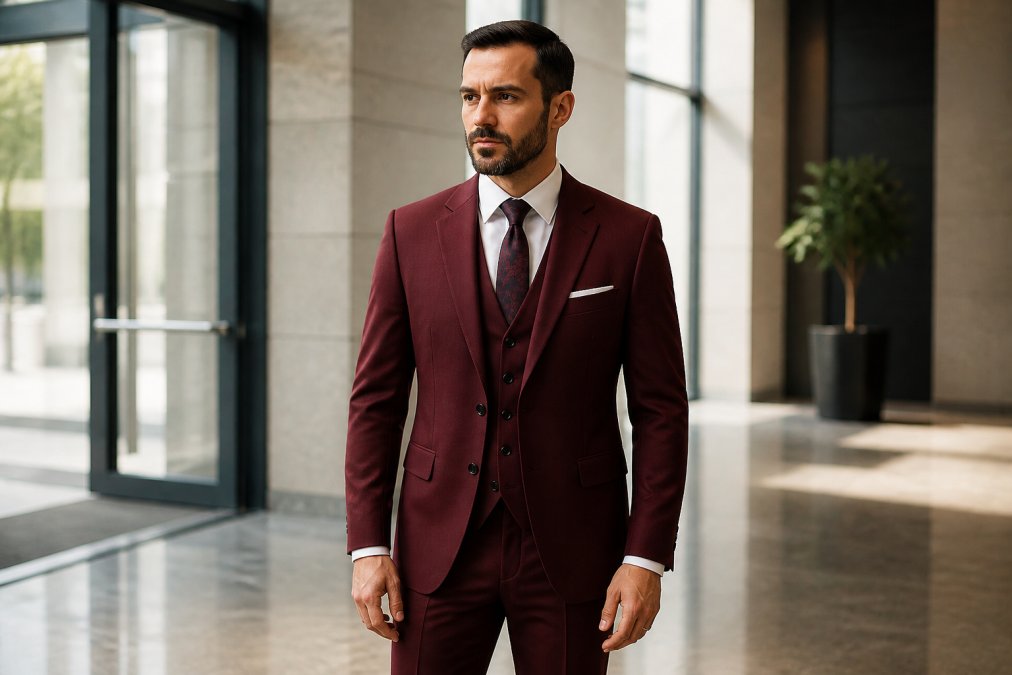
Start with the fundamentals. A white or light blue dress shirt under your suit is the safest choice for interviews. A subtle pattern like thin stripes works for creative roles; solid colours remain the default for corporate, finance, or government positions.
Tie selection follows similar logic. A solid navy, burgundy, or charcoal tie works universally. A subtle pattern adds personality without distraction. Avoid novelty ties or overly bright colours. The tie should extend to your belt buckle.
Shoes matter significantly in interviews because you're being evaluated on every detail. Polished black or dark brown leather dress shoes are the standard. Avoid loafers, suede, or anything casual; a proper oxford or derby in leather is the expectation. Your socks should match your trousers or be dark neutral colours.
Accessories should be minimal and intentional. A simple watch adds polish. Skip flashy cufflinks for interviews unless the role is specifically in fashion or creative fields. A simple leather belt in black or brown, matching your shoes, completes the look.
Arrive 10 minutes early to check for wrinkles, loose threads, or anything that shifted during travel.
Essential Accessories for Business Suits
Accessories transform a suit from functional to polished. The right pieces signal attention to detail and elevate your overall presentation.
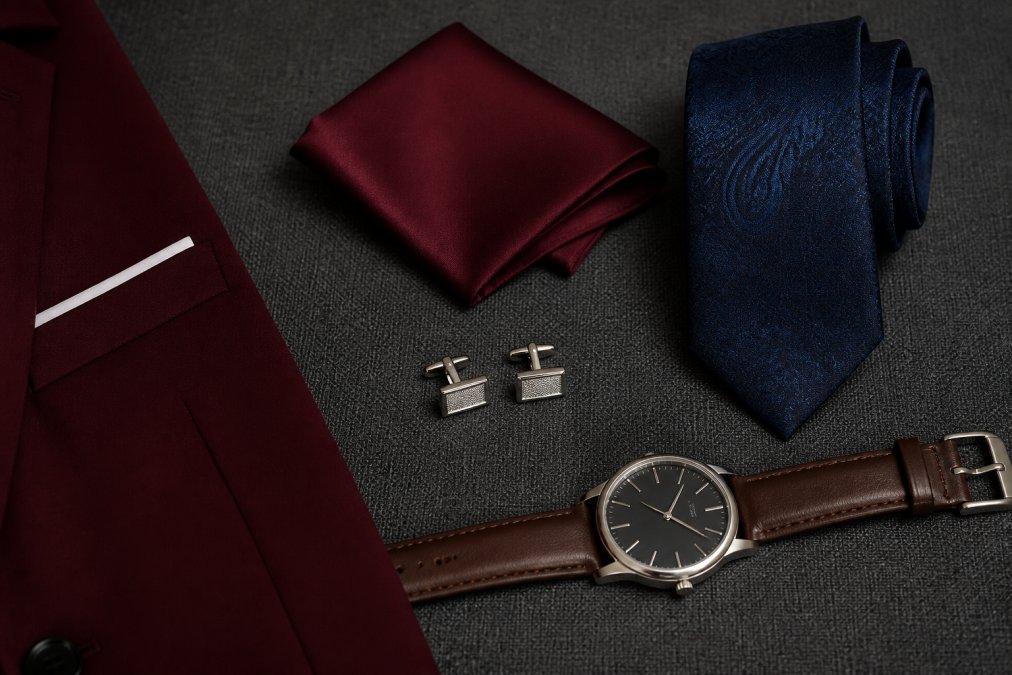
Dress shirts are technically accessories to your suit, and their quality matters significantly. A 100% cotton or cotton-blend shirt breathes better than synthetic alternatives. Long-sleeve dress shirts are the standard for business professional environments. The collar should fit snugly without restricting your neck, and cuffs should extend just past your wrist bone when arms are relaxed.
Ties remain essential for business professional dress codes. A silk tie in a solid colour or subtle pattern works universally. The width should be proportional to your frame. A properly tied tie extends to your belt buckle.
Cufflinks and pocket squares elevate formal occasions without being necessary for daily office wear. Simple designs in silver, gold, or mother-of-pearl work across contexts. A pocket square adds polish for presentations or client meetings.
Watches serve both functional and aesthetic purposes. A leather-strap watch in black or brown, or a simple metal watch, reads as professional. Avoid oversized sports watches.
Belts and shoes must coordinate. A black suit pairs with black shoes and a black belt; charcoal works with black or dark brown; navy pairs with black or dark brown shoes and a matching belt. Leather is the expectation.
SimonVon Shop stocks a comprehensive range of formal accessories designed to coordinate with their suit collections.
Fabric Quality and Suit Durability for Daily Wear
Fabric composition determines how long a suit lasts and how it performs under regular wear.
Polyester-viscose blends dominate affordable formal suits because they balance durability, breathability, and cost. A 70/30 or 80/20 polyester-viscose blend performs well for daily office wear, resisting pilling and maintaining shape through regular dry cleaning. SimonVon Shop's suit collections use this blend extensively, like the One Button Men's Striped Three-piece Suit.

Pure wool represents the traditional premium option. Merino wool breathes exceptionally well and resists wrinkles naturally. However, pure wool requires more careful maintenance and costs significantly more than blends.
Stretch fabrics (blends incorporating elastane or spandex) add mobility without compromising structure. A small percentage of stretch (2-5%) allows the suit to move with your body, reducing stress on seams and fabric.
A $230 polyester-viscose suit worn once weekly will outlast an $800 wool suit worn five days weekly without rotation. Durability depends on wear frequency, maintenance, and how many suits you own.
Affordable Formal Suit Collections at SimonVon Shop
SimonVon Shop positions itself as New Zealand's premier destination for high-quality menswear at unbeatable prices. The brand's approach, premium quality without premium pricing, addresses a genuine gap for professionals who need reliable formal suits without investing hundreds of dollars per garment.
The core collection focuses on complete three-piece suits (jacket, vest, and trousers) priced at $230, with individual formal trousers available separately at $49.90. This modular approach lets you build a wardrobe strategically.
Navy suits dominate the collection because they're the most versatile choice for business wear. The Navy Blue Men's Elegant 3pcs Suit and Navy Blue Men's Three-Piece Suit deliver the core formal suit for daily office wear. Navy pairs with virtually every dress shirt colour and works across corporate, government, and professional services sectors.
Black suits serve formal occasions beyond office wear. The Men's Elegant Black 3pcs Suit provides the traditional black-tie foundation at a fraction of designer pricing.
Burgundy and patterned options add personality for creative industries or secondary suits. The Men's 3-Piece Suit Set in Burgundy combines burgundy with slight stretch fabric. The One Button Men's Striped Three-piece Suit in plaid provides texture for professionals who need more personality.
Trousers as separates expand outfit possibilities. The Navy Blue 555 Mens Formal Trousers, Middle Grey Mens Formal Trousers, and Black 556 Mens Formal Trousers at $49.90 each let you pair trousers with blazers you already own.
Suit Care and Maintenance for Longevity
How you care for a suit determines whether it lasts 2 years or 5 years. Proper maintenance is less expensive than replacing suits frequently.
Dry cleaning frequency is the first lever. Most professionals over-clean their suits. A suit worn once weekly needs dry cleaning only 2-3 times yearly unless visibly soiled. Spot-clean stains immediately with a damp cloth. Air out suits between wears for 24 hours to allow fabric recovery.
Storage matters significantly. Suits should hang on proper wooden hangers that support the shoulder structure. Store suits in a cool, dry location away from direct sunlight. A breathable garment bag protects from dust without trapping moisture.
Pressing and steaming differ in their effects. A professional press works for trousers and creates crisp creases. Steaming works for jackets and removes wrinkles without flattening fabric. A home steamer ($30-50) maintains appearance between professional cleanings.
Pilling and bobbling occur on lower-quality fabrics, but even good suits develop small pills with wear. A fabric shaver ($10-20) restores appearance without damaging underlying fabric.
Seam and button maintenance prevents small issues from becoming expensive repairs. Check seams monthly for loose threads. Replace buttons before they break.
Rotation extends lifespan dramatically. A professional with one suit wearing it five days weekly will see visible wear within 18 months. The same suit worn once or twice weekly lasts 4-5 years.
| Maintenance Task | Frequency | Cost | Impact |
|---|---|---|---|
| Dry cleaning | 2-3 times yearly | $15-25 per clean | Removes deep soil, extends lifespan |
| Spot cleaning | As needed | $0 (DIY) | Prevents stain setting |
| Airing out | After each wear | $0 | Removes odours, allows fabric recovery |
| Pressing trousers | Monthly | $5-8 per press | Maintains crease, professional appearance |
| Button checking | Monthly | $0 | Prevents button loss |
According to garment care guidelines from textile conservation experts, proper storage and minimal dry cleaning are the two factors that most significantly extend clothing lifespan.
Selecting the right formal suit for business wear requires understanding fit, fabric, and how to style pieces that work across your professional life. The formal suits business professionals wear daily should balance structure with comfort, allowing you to move confidently through meetings and presentations without distraction.
SimonVon Shop simplifies this decision by offering complete three-piece suits at $230, with quality fabric blends and modern tailoring that compete with significantly more expensive alternatives. Whether you're building your first professional wardrobe or expanding a rotation of suits, starting with a navy suit in your correct fit provides the foundation for countless outfit combinations. Add complementary trousers, invest in proper accessories, and commit to simple maintenance habits, these fundamentals deliver professional appearance without premium pricing.
Shop Now at SimonVon Shop and discover how quality formal suits for business professionals can be both accessible and genuinely excellent.
Frequently Asked Questions
Q: What makes a suit professional for business wear?
A: A professional business suit combines proper tailoring, quality fabric, and neutral colour choices. Look for a tailored fit that skims your body without excess fabric, lapel width that suits your frame, and durable polyester-blend materials that maintain shape throughout the workday. Solid colours like navy, charcoal, and black are standard for formal suits for business professionals. Ensure the jacket covers your hip, trousers break slightly at the shoe, and seams are straight and well-finished.
Q: What are business professional dress code requirements?
A: Business professional dress codes typically require a full suit with matching jacket and trousers, a collared dress shirt, and conservative accessories. Most corporate environments expect navy or charcoal suits, closed-toe shoes, minimal jewellery, and neat grooming. Some industries are more formal than others, but a complete three-piece suit with vest demonstrates a high level of business professional attire. Check your specific workplace guidelines, as some organisations have relaxed standards.
Q: How should I style a suit for a job interview?
A: For a job interview, choose a well-fitted suit in a neutral colour like navy or charcoal. Pair it with a crisp white or light blue dress shirt, a conservative tie or no tie depending on the industry, and polished dress shoes. Add simple accessories like a watch or a pocket square to show attention to detail. Ensure your suit is freshly cleaned, wrinkle-free, and fits properly at the shoulders and chest. This approach demonstrates professionalism and respect for the opportunity.
Q: What accessories are essential for a complete business suit look?
A: Essential accessories for business suits include a quality dress shirt, conservative tie or bow tie, dress shoes, and a watch. Additional pieces that elevate your look include cufflinks, a pocket square, and a tie clip. These accessories should be subtle and complement rather than distract from your suit. Quality accessories signal professionalism and attention to detail in the workplace.
Q: How do I maintain my formal suits to ensure they last?
A: Proper suit care extends durability significantly. Hang suits on wooden hangers to maintain shape, and dry clean only when necessary (every 5-7 wears for regular business use). Between cleanings, spot-clean stains and air out suits overnight. Store in a cool, dry place away from direct sunlight to prevent fading. Brush the fabric gently with a soft brush to remove dust. Rotate between suits to allow fabric recovery time.
This article was written using GrandRanker