Patterned Dress Shirts for Formal Events

Table of Contents
- Are Patterned Dress Shirts Appropriate for Formal Events?
- Understanding Formal vs. Semi-Formal Dress Codes
-
Types of Dress Shirt Patterns and Their Formality Level
- Pattern scale as the formality lever
- Micro-patterns: pinpoint and micro-checks (formal-appropriate)
- Classic patterns: fine pinstripe and small checks (semi-formal to formal)
- Bold patterns: large checks, paisley, and larger prints (semi-formal and casual)
- The density principle: how much of the fabric is pattern?
- How to Style a Patterned Shirt for a Wedding
- Matching Ties with Patterned Shirts
- Best Dress Shirt Patterns for Professional Events
- The Tuxedo Rule and Pattern Boundaries
- Frequently Asked Questions
Last Updated: September 22, 2026
Are Patterned Dress Shirts Appropriate for Formal Events?
Patterned dress shirts formal wear occupies a grey zone in formal dressing. They can work brilliantly at some events and completely undermine your look at others. The answer depends on three things: the specific event's dress code, the pattern's scale and subtlety, and how you coordinate the rest of your outfit.
Patterned dress shirts are appropriate for formal events when the pattern is restrained and the overall composition stays polished. Loud paisley and bold checks belong at casual gatherings; subtle pinstripes and micro-patterns belong at galas and black-tie weddings.
The key distinction is whether a specific pattern reads as refined or distracting in a formal setting.
Understanding Formal vs. Semi-Formal Dress Codes
Formal events include black-tie galas, formal weddings, and official ceremonies. These demand the highest level of polish. Here, patterned dress shirts must be almost invisible, subtle enough that only someone standing close notices the pattern exists. Pinstripes, micro-checks, and pinpoint weaves fit this category. Bold paisley, large checks, and prominent prints do not.
Semi-formal events include cocktail parties, business galas, and smart-casual weddings. These offer more flexibility. You can wear slightly bolder patterns here, a checked shirt or a restrained paisley, as long as the overall composition stays balanced. The pattern should complement your suit and tie, not compete with them.
Business formal requires the same restraint as black-tie occasions. Business casual welcomes patterned dress shirts more openly, including the Classical Men's spring and autumn slim printed fashion long sleeved shirts.

The rule is straightforward: the more formal the event, the more restrained your pattern must be.
Types of Dress Shirt Patterns and Their Formality Level
The key variable determining formality is the scale and density of the pattern, how large the repeating unit is and how much of the fabric surface it occupies.
Pattern scale as the formality lever
Formality increases as pattern scale decreases. A micro-pattern (repeating unit smaller than 2mm) reads as texture rather than pattern from arm's length and is appropriate at black-tie events. A macro-pattern (repeating unit larger than 8mm) is visually dominant and belongs at casual or semi-formal occasions only. Formal dress codes evolved to minimise visual noise; a shirt that appears nearly solid from across a room signals discipline and respect for the occasion.
This principle applies across all pattern types. A micro-checked shirt is more formal than a large-checked shirt. A fine pinstripe is more formal than a bold pinstripe. A pinpoint weave is more formal than a micro-check because the scale is smaller still.
Micro-patterns: pinpoint and micro-checks (formal-appropriate)
Pinpoint weaves and micro-checks are the safest patterned dress shirts for formal events because their scale is so fine they read as solid from a distance. Up close, they add texture and visual interest without drawing attention.
Pinpoint patterns feature tiny dots (0.5-1mm diameter) nearly invisible from a distance; micro-checks have 2-3mm squares that blend into the fabric. Both work at black-tie events, formal weddings, and corporate galas. They add sophistication without breaking formality rules and signal thoughtful dressing without announcing it loudly.
Classic patterns: fine pinstripe and small checks (semi-formal to formal)
A fine pinstripe (stripe width 1-2mm, spacing 2-3mm) works at most semi-formal and many formal occasions; small checks (3-5mm squares) work well at semi-formal events and business galas. The distinction between "fine" and "bold" is critical: fine pinstripes read as restrained, bold pinstripes (3mm or wider) read as statement-making. Fine pinstripes elongate the frame and read as professional and polished when paired with a solid suit and tie.
Small checks in muted colours (navy on white, grey on white, burgundy on white) work at semi-formal events and formal business occasions. Larger checks (6mm or wider) in bold colours belong at casual and semi-formal cocktail events.
Bold patterns: large checks, paisley, and larger prints (semi-formal and casual)
Large-scale checks, paisley, and large-scale prints work at semi-formal events and smart-casual occasions but rarely at black-tie galas. They announce themselves from across a room and violate the restraint principle that underpins formal dress codes.
Bold patterns demand restraint elsewhere in your outfit. If your shirt has visual weight, your tie should be solid or nearly solid. Your suit should be a neutral colour. Your accessories should be understated. Even then, bold patterned dress shirts work best when the event's dress code explicitly permits them or encourages personality.
The density principle: how much of the fabric is pattern?
Density also matters: a pattern covering 30% of the fabric is more formal than one covering 70%. Formal patterns are sparse; casual patterns are dense. When evaluating a shirt, ask: from three metres away, does it read as a solid colour with texture, or as a patterned shirt? If the former, it's formal-appropriate.
How to Style a Patterned Shirt for a Wedding
Weddings are the most common formal event where men wear patterned dress shirts. The approach depends on whether you're a groomsman, a guest, or the groom.
Classical Men's spring and autumn slim →
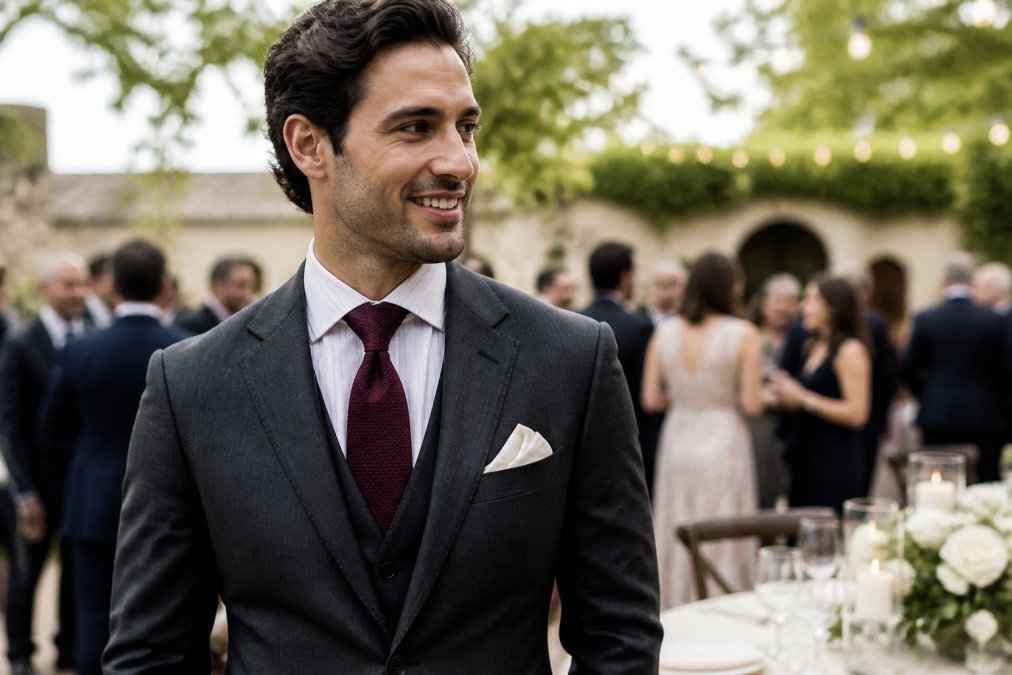
For groomsmen, wear subtle patterns like pinstripes or micro-checks paired with the groom's specified suit colour and a complementary tie. Keep accessories minimal. For guests, follow the stated dress code: formal events require subtle patterns; semi-formal or cocktail events permit checked or restrained paisley shirts. For the groom, avoid patterned dress shirts entirely, wear crisp white or ivory to keep focus on your suit, tie, and accessories.
Matching Ties with Patterned Shirts
Coordinating a tie with a patterned dress shirt requires understanding how to layer patterns and textures across shirt, tie, and suit without creating visual conflict.
The pattern-layering hierarchy
Only one garment should have a visually prominent pattern. If your shirt has a pattern, your tie and suit should be solid or nearly solid. Multiple patterns compete for visual attention, creating the impression of casualness or poor coordination.
For patterned dress shirts at formal or semi-formal events: Shirt pattern + solid tie + solid suit is most formal and safest. Avoid pairing patterned ties with patterned shirts at formal events.
The first option is nearly always correct. A solid-coloured tie paired with a patterned shirt keeps the visual hierarchy clear: the shirt is the statement, the tie is the anchor.
Choosing tie colour with patterned shirts
Pick a tie colour that appears in the shirt pattern or complements it: echo a colour in the pattern, complement the pattern's background, or provide subtle contrast. Avoid ties that introduce a third unrelated colour. The tie should feel like a natural extension of the shirt's colour story.
Texture as a secondary pattern
When a tie is solid in colour, its texture becomes important. A matte silk tie is the safest choice with any patterned dress shirt, it provides visual rest and does not compete with the shirt's pattern. A subtle sheen (silk with a slight lustre) adds sophistication without introducing visual complexity.
Avoid ties with heavy texture that competes with your shirt. A grenadine tie (with its distinctive raised texture) or a knit tie (with visible knit structure) paired with a patterned shirt is too much visual information. The tie's texture should be subordinate to its colour function.
For semi-formal events, a subtle jacquard tie (a woven pattern so fine it reads as texture rather than pattern from a distance) can work with a patterned shirt, provided the shirt's pattern is also fine and the two patterns do not occupy the same visual scale.
The two-pattern rule and when to break it
Never pair two visually prominent patterns. A patterned shirt plus a patterned tie creates visual chaos. Your formal attire should feel composed and intentional, not cluttered. This rule is absolute for black-tie and formal events.
Practical coordination checklist
Before wearing a patterned shirt with a tie to a formal or semi-formal event, ask:
- Is the tie solid or nearly solid in colour? (Yes = proceed)
- Does the tie colour appear in the shirt pattern or complement it? (Yes = proceed)
- Is the tie's texture subtle and matte or silk? (Yes = proceed)
- From arm's length, do the shirt and tie read as a unified composition, or do they compete for attention? (Unified = proceed; competing = choose a different tie)
- If the tie has any pattern, is it so fine it reads as texture? (Yes = proceed; No = choose a solid tie)
Best Dress Shirt Patterns for Professional Events
Professional events, annual dinners, awards ceremonies, client galas, demand the same formality as formal weddings. Your patterned dress shirt choice should reflect this.
The Tuxedo Rule and Pattern Boundaries
The Tuxedo Rule is the clearest boundary for patterned dress shirts at formal events. If the event calls for a tuxedo, your shirt must be white or ivory, no pattern whatsoever.
Frequently Asked Questions
Is a patterned dress shirt formal enough for black-tie events?
Not typically. Black-tie events demand a crisp white dress shirt as part of strict formal attire. However, semi-formal occasions and weddings allow subtle patterns like pinstripes or micro-checks. The formality level depends on pattern scale and density, micro-patterns read as formal, while bold prints signal casual wear. When in doubt, choose a solid white or light-coloured shirt for black-tie events to respect the dress code.
What's the best way to match ties with patterned shirts?
Follow the visual balance rule: if your dress shirt has a bold pattern, wear a solid-coloured tie or one with a complementary but smaller pattern. Avoid competing patterns that create visual chaos. For subtle pinstripes or checks, you have more flexibility with patterned ties. Ensure the tie's colour palette complements the shirt's hues without clashing. A well-coordinated necktie should enhance, not distract from, your overall formal appearance.
Can I wear a patterned dress shirt to a professional business event?
Yes, if you choose the right pattern. Subtle patterns like pinpoints, fine checks, or light pinstripes work well for professional events and business-formal settings. These patterns maintain a polished, tailored look when paired with a matching suit and conservative tie. Avoid bold paisley, large checks, or bright prints, which read as casual. The pattern should enhance your professional appearance without drawing excessive attention.
What's the difference between formal dress shirts and casual printed shirts?
Formal dress shirts feature subtle, tight patterns (pinstripe, micro-check) or are solid white, with structured collars and refined tailoring. Casual printed shirts use larger, bolder prints (paisley, florals, geometric designs) with relaxed fits and softer fabric. The key distinction is pattern scale and density, formal patterns are nearly invisible from a distance, while casual prints are immediately noticeable. Fabric weight, collar style, and fit also differ, with formal shirts offering crisp construction and casual shirts prioritising comfort over structure.